
Extreme Bolt & Fastener
Quote

Set Screws

Last updated

Made of specialty metals, polymers and ceramics

Set ScrewsSet screws are unique in that they have no screw head, meaning that they have no protruding part past the threaded shaft: they are thread only with a socket or slotted driver insert at one end. Set screws are used to secure an object within or against another object. Typically they secure a rotating part such as a gear or shaft. Set screws are driven through a threaded hole in the rotating part until it is tight against the inner object, preventing from moving relative to the outer object. Set screws are available with with these points:
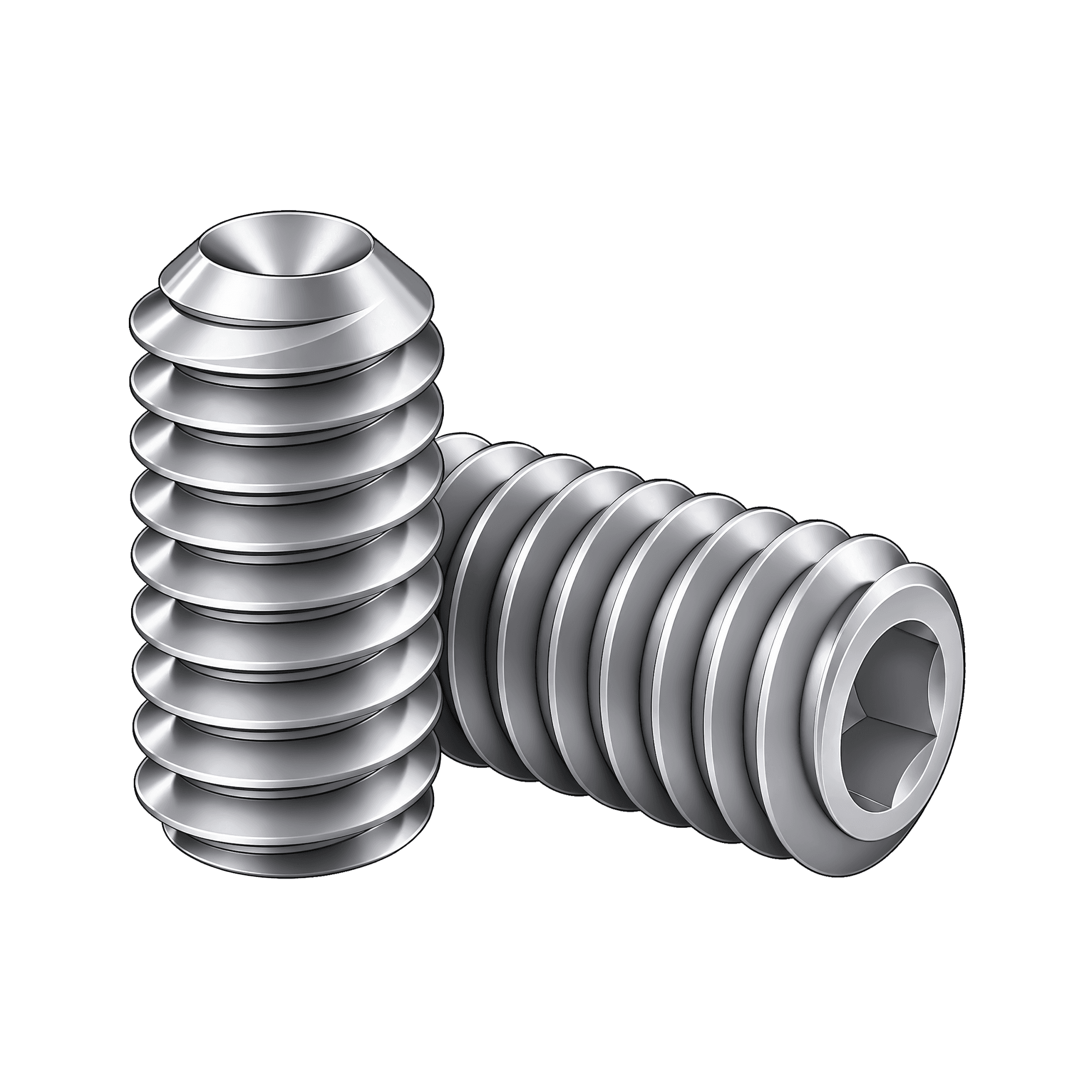
Cup point set screw

Cup Point

This is the most commonly used set screw and is identified by a cup-shaped indentation on one end. Cup points are typically used for a quick, semi-permanent or permanent applications where it is acceptable to cut the cup point edge of the screw.
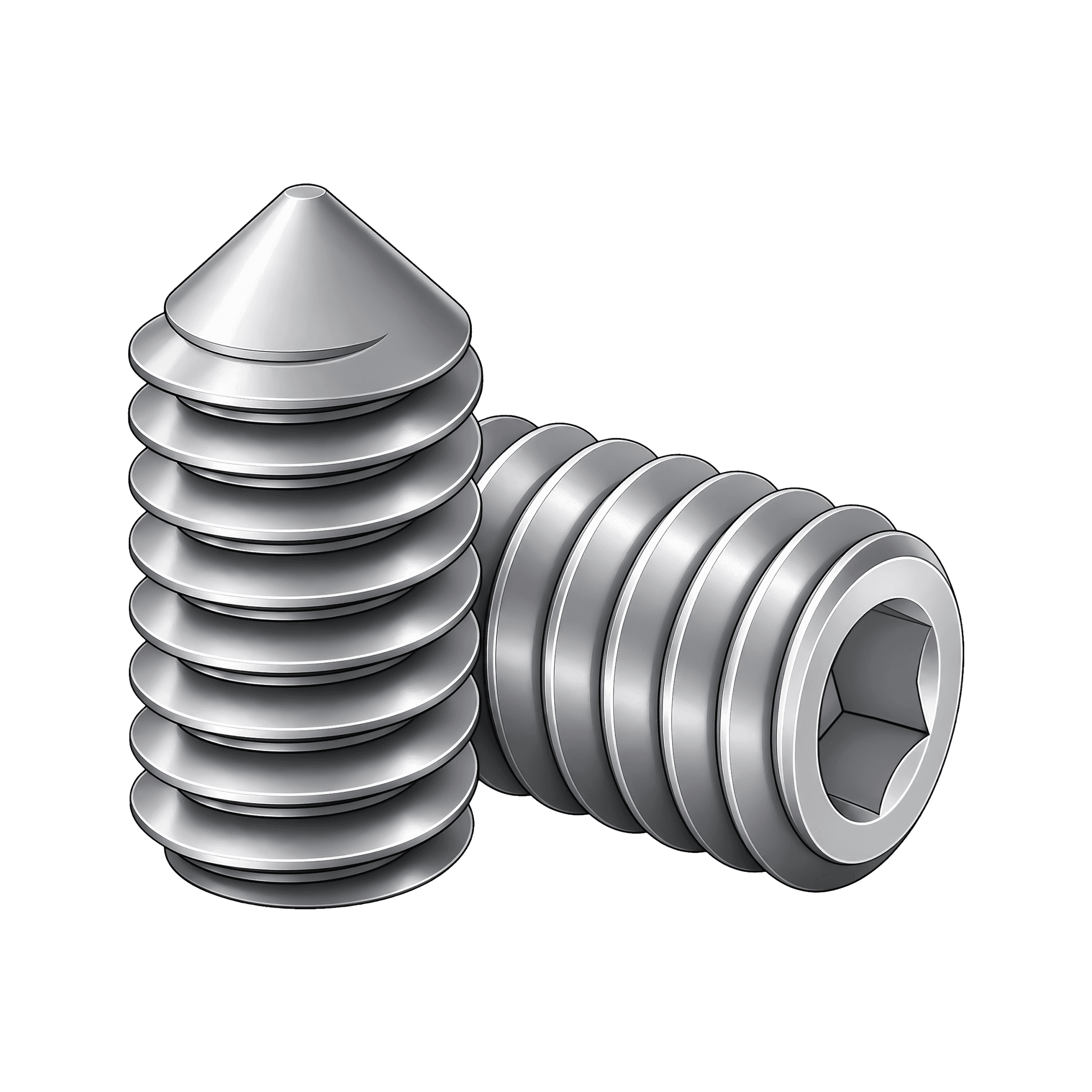
Cone point set screw

Cone Point

A cone point is easily identifiable by its sharp cone-shaped point – just like an ice cream cone. Cone point set screws deliver the strongest clamping force due to the deep penetration of the point. As a result they are used for permanent assembly.
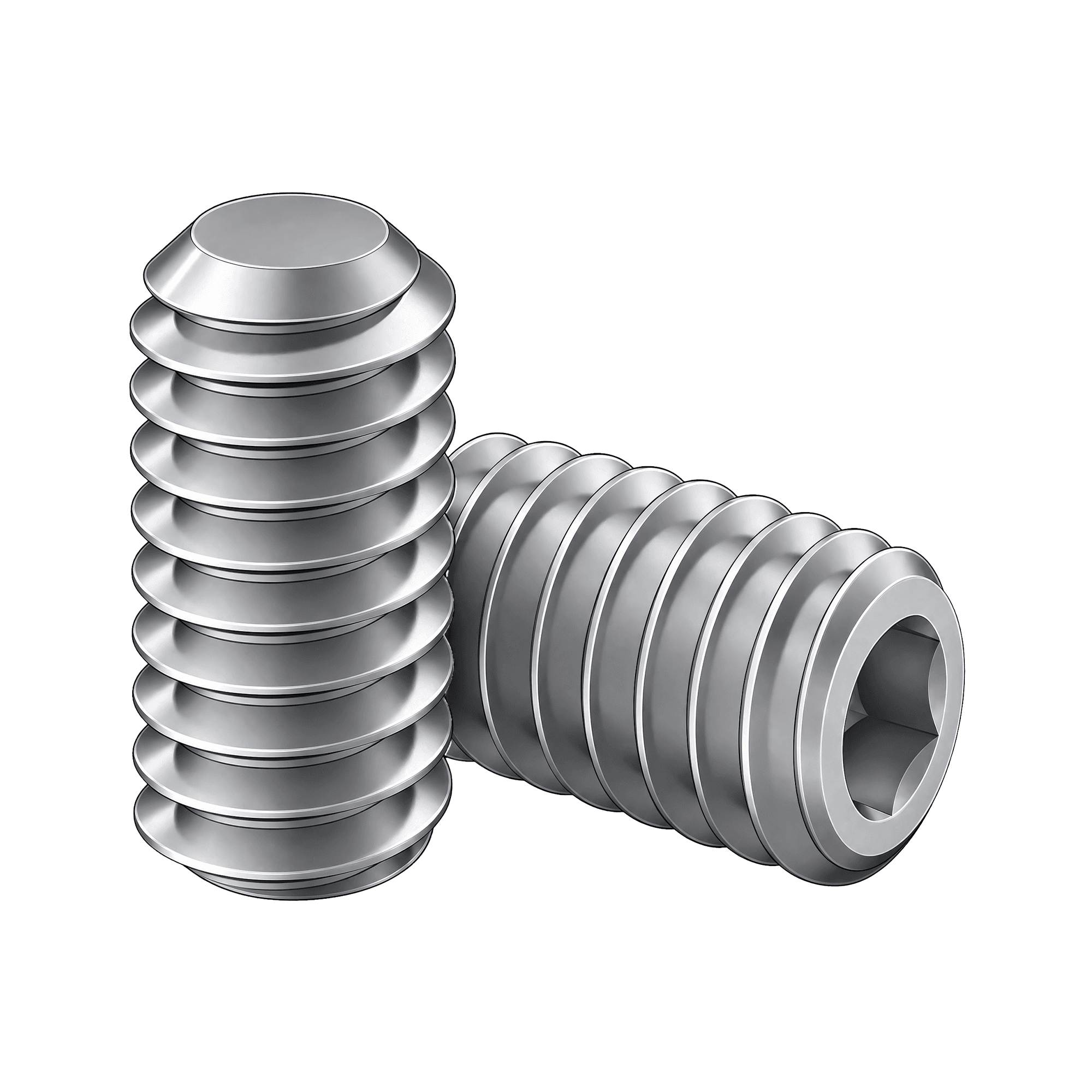
Flat point set screw

Flat Point

The cheapest and simplest of the set screw point styles, this screw has a flat surface on the bottom of the screw. This type is used when you need the ability to frequently change parts and require minimal shaft deformation.

Set Screw Sizes

  • #00 - 6"
  • M1.2 - M150

Set Screw Specifications

  • ASME B18.3, DIN 913 / ISO 4026
  • DIN 913 / ISO 4026
  • DIN 914 / ISO 4027
  • DIN 915 / ISO 4028
  • DIN 916 / ISO 4029

Thread Options

Visit our thread options page for more information on Extreme Bolt's threading capabilities:

  • Thread types and attributes
  • Classes and tolerances
  • How threading can affect bolt performance
  • Specialty threads

Set Screws - frequently asked questions

What point styles are available for set screws?

Set screws are available with cup point, cone point, and flat point ends. Cup point is the most common for semi-permanent or permanent applications, cone point delivers the strongest clamping force for permanent assembly, and flat point is used when parts must be changed frequently with minimal shaft deformation.

What sizes do set screws come in?

Set screws are available in inch sizes from #00 to 6 inches and metric sizes from M1.2 to M150.

Which materials can set screws be made from?

Set screws can be made from a wide range of specialty metals including Inconel, Hastelloy, Monel, Titanium, Tantalum, Zirconium, Tungsten, A286, MP35N, and Nitronic; engineered polymers (PEEK, PFA, PTFE, PVDF, Torlon, Vespel); and advanced ceramics (Alumina, Zirconia).

What specifications and standards do these set screws meet?

Set screws are made to ASME B18.3 and metric standards including DIN 913 / ISO 4026, DIN 914 / ISO 4027, DIN 915 / ISO 4028, and DIN 916 / ISO 4029.

What drive and thread options are available?

Set screws are available in both fine and coarse threads, and with socket (hex) drive or slotted drive. Additional threading options can be discussed through the threading capabilities page.

Why do set screws have no head?

Set screws are thread-only with a socket or slotted driver insert at one end, so no part protrudes past the threaded shaft. They are driven through a threaded hole to secure one object against another, typically holding a rotating part such as a gear or shaft in place.

Questions?

Our material experts are ready to help guide you through your specific application.