

Chemical Processing
Last updated
Specialty materials battle the harshest acids and high temperatures

Need help choosing a material?
The chemical processing industry is renowned for its corrosion issues particularly from its use of strong acids and corrosive chemicals. No matter the industry: acid production, specialty chemicals, agricultural chemicals, fertilizers, or polymers specialty materials like nickel alloys, zirconium and tantalum as well as chemically resistant polymers are critical to a safe and reliable chemical infrastructure. If you unsure what is best, you could rely our decades of direct experience in the chemical processing industry for advice and guidance you could trust.
Corrosion Focus
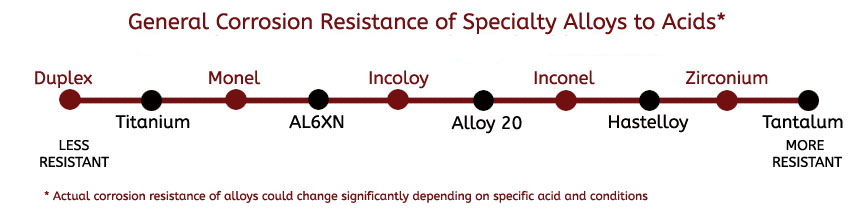
- Hastelloy C276 is critical for resistance to acids like sulfuric and hydrochloric acid, while C22 is ideal for use in strong oxidizers like nitric acid-rich fertilizer production
- Monel bolts provide protection from hydrofluoric acid – which will even corrode Tantalum
- Tantalum and Zirconium are used in the most extreme corrosive conditions where boiling acids are common
- Engineered Polymers like PVDF and PEEK work in low temperature acidic environments.
High Temperature Focus
Chemical Processing - Frequently Asked Questions
What fastener material do you recommend for high-temperature chemical processing up to around 1200F?
For high-temperature corrosive environments, Inconel 625 bolts are often a good fit. They are usable to about 1800F and can handle many chemicals, so a fluctuating process topping out near 1200F is well within range.
Are Inconel 625 bolts suitable for every chemical processing environment?
No. While Inconel 625 handles many chemicals and high temperatures, it may not be the right choice if the bolts are exposed to strong oxidizers, high acid concentrations, or hydrofluoric acid. Those conditions require re-evaluating the material.
Which fasteners resist sulfuric and hydrochloric acid in chemical processing?
Hastelloy C276 is critical for resistance to acids like sulfuric and hydrochloric acid. For strong oxidizers such as nitric acid-rich fertilizer production, Hastelloy C22 is the better choice.
What material handles hydrofluoric acid, which corrodes even tantalum?
Monel bolts provide protection from hydrofluoric acid, which will even corrode tantalum. This makes Monel a key material for HF service in chemical processing.
What fasteners are used for the most extreme corrosive conditions, like boiling acids?
Tantalum and zirconium are used in the most extreme corrosive conditions where boiling acids are common. For less aggressive, low-temperature acidic environments, engineered polymers like PVDF and PEEK also work.
When should I choose Incoloy over other high-temperature fasteners?
Incoloy bolts are key for long-term continuous use in high temperatures where oxidation, carburization, and creep resistance are needed. Inconel fasteners are chosen for their combination of high temperature and corrosion resistance.
