Incoloy Fasteners - Bolts, Screws & Nuts
Last updated
A Ni-Cr alloy with very good high temperature stability

Need help choosing a material?

- Oxidization and carburization resistant up to 1400°F / 760°C
- Good corrosion resistance, which increases with the various grades
- Download the Incoloy 800 datasheet and 825 datasheet
Not to be confused with Inconel, Incoloy fasteners are made of a nickel alloy which contains iron and a lower content of nickel. Incoloy is essentially a more economical option to Inconel, yet with more restricted corrosion resistance and temperature limits. Typically, Incoloy is an ideal material for long-term exposure in high temperature environments due to its oxidation, carburization and creep resistance. Incoloy is widely used for its resistance to seawater, brine, sour gas and high chloride environments at elevated temperatures, which make it a popular choice in the oil and gas and power industries.
The most commonly used grades of Incoloy fasteners are Incoloy 800, 800H, 800HT; Incoloy 825; and Incoloy 925. For more indepth information on these specific grades, visit our specific web pages or contact one of our engineering experts:
- Incoloy 800, 800H, 800HT (1.4876, 1.4958, 1.4959)
- Incoloy 825 (2.4858)
- Incoloy 925
Datasheets: Incoloy 800, 800H 800HT; Incoloy 825; and Incoloy 925
Common Incoloy Chemistry, Grades & Specifications
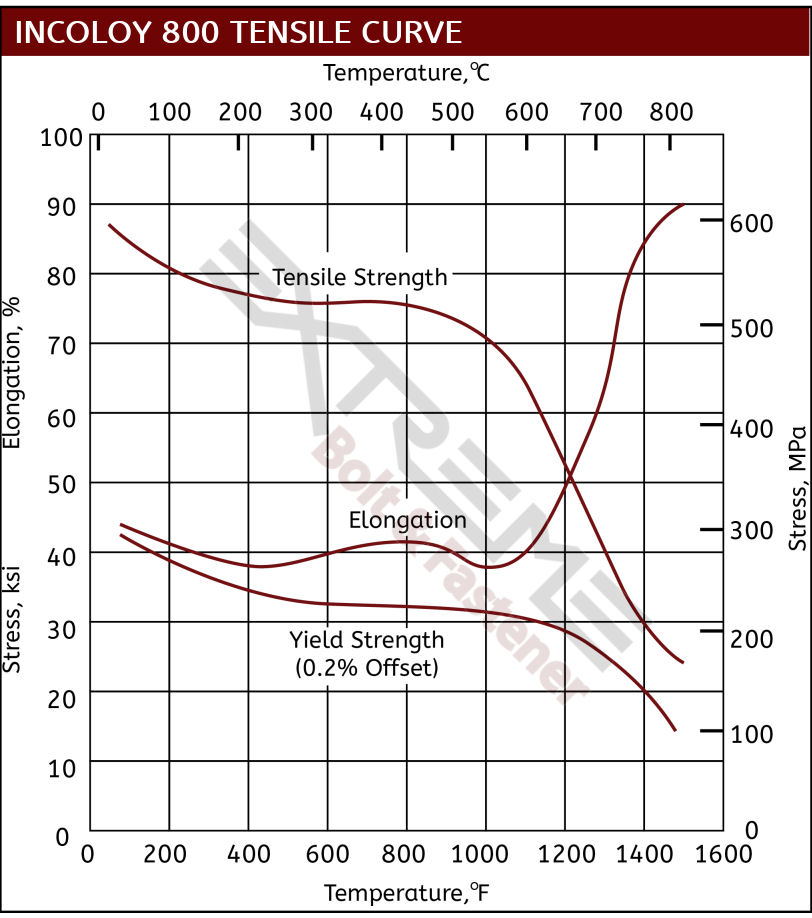
Incoloy 800, 800H, H800HT (1.4876, 1.4958, 1.4959)
Incoloy 800 series fasteners are best utilized for applications that require stable structure and good strength during prolonged exposure to high temperatures. Learn more by downloading out Incoloy 800 datasheet.
Incoloy 800, 800H & 800HT Specifications: UNS N08800/ N08810 / N08811 (800, 800H, 800HT), ASTM B408, ASME SB408, ASTM B564/ASME SB564, EN 10204-3.1, Werkstoff 1.4876 (800), Werkstoff 1.4876 H and 1.4958 (800H), Werkstoff 1.4876 HT and 1.4959 (800HT)
| Incoloy 800 | Ni | Fe | Cr | C | Al | Ti | Al-Ti |
|---|---|---|---|---|---|---|---|
| Min % | 30 | 39.5 | 19 | - | 0.15 | 0.15 | 0.3 |
| Max % | 35 | - | 23 | 0.1 | 0.6 | 0.6 | 1.20 |
| Incoloy 800H | Ni | Fe | Cr | C | Al | Ti | Al-Ti |
| Min % | 30 | 39.5 | 19 | 0.05 | 0.15 | 0.15 | 0.3 |
| Max % | 35 | - | 23 | 0.1 | 0.6 | 0.6 | 1.20 |
| Incoloy 800HT | Ni | Fe | Cr | C | Al | Ti | Al-Ti |
| Min % | 30 | 39.5 | 19 | 0.06 | 0.25 | 0.25 | 0.85 |
| Max % | 35 | - | 23 | 0.1 | 0.6 | 0.6 | 1.2 |
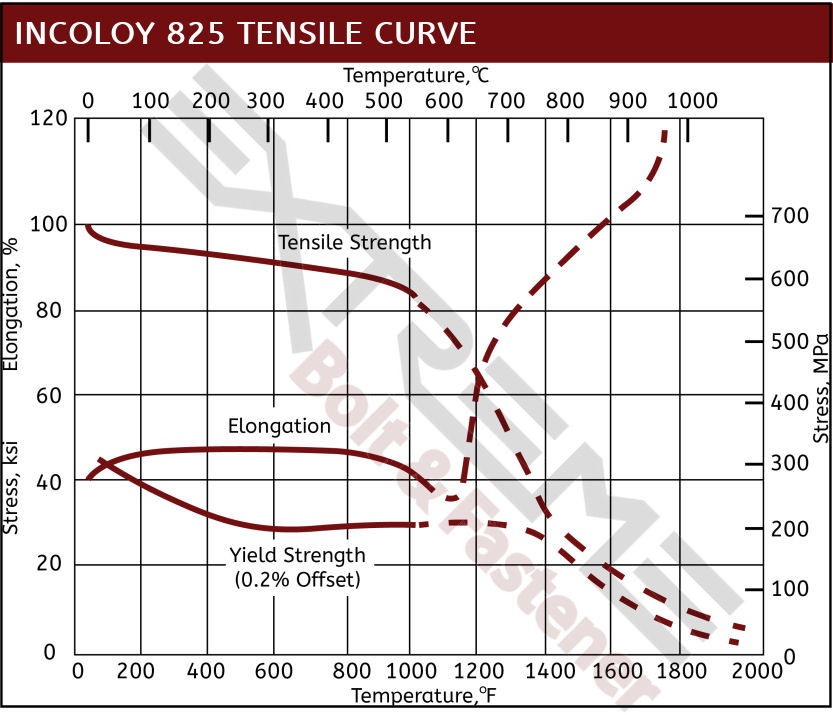
Incoloy 825 (2.4858)
Related to the Incoloy 800 series alloys, Incoloy 825 (2.4858) differentiates itself with the additional elements of molybdenum and copper, which provides it improved corrosion resistance. Learn more by downloading out Incoloy 825 datasheet.
Incoloy 825 Specifications: UNS N08825, BS 3076NA16, ASTM B 425, ASTM B 564, ASME SB 425, ASME SB 564, ASME Code Case N-572, DIN 17752, DIN 17753, DIN 17754, VdTÜV 432, ISO 9723, ISO 9724, ISO 9725, Werkstoff Nr 2.4858
| Incoloy 825 | Ni | Fe | Cr | Mo | Cu | Ti | C | Mn | S | Si | Al |
|---|---|---|---|---|---|---|---|---|---|---|---|
| Min % | 38 | 22 | 19.5 | 2.5 | 1.5 | 0.6 | - | - | - | - | - |
| Max % | 46 | - | 23.5 | 3.5 | 3.0 | 1.2 | 0.05 | 1.0 | 0.03 | 0.5 | 0.2 |
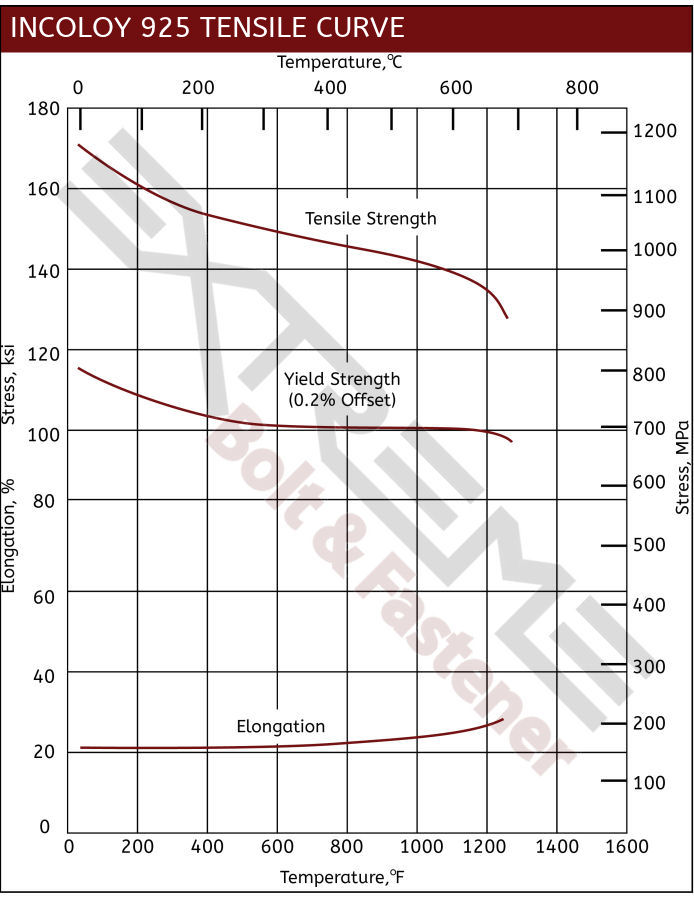
Incoloy 925
Incoloy 925 is a precipitation hardened alloy. It offers comparable corrosion resistance to it’s sister alloy Incoloy 825, but with the increased strength resulting from the age hardening process. Learn more by downloading out Incoloy 925 datasheet.
Incoloy 925 Specifications: UNS N09925, ASTM B637, NACE MR0175
| Incoloy 925 | Ni | Fe | Cr | Mo | Cu | Ti | C | Mn | S | Si | Al | Nb |
|---|---|---|---|---|---|---|---|---|---|---|---|---|
| Min % | 42 | 22 | 19.5 | 2.5 | 1.5 | 1.9 | - | - | - | - | 0.1 | - |
| Max % | 46 | - | 22.5 | 3.5 | 3.0 | 2.4 | 0.03 | 1.0 | 0.03 | 0.5 | 0.5 | 0.5 |
Incoloy fastener styles
Incoloy Screws
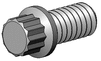


Incoloy Bolts
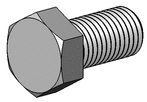
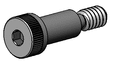


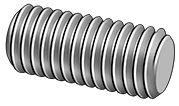
Incoloy Studs & Threaded Rods

Incoloy Washers


Incoloy - Frequently Asked Questions
Answers from our engineers, drawn from the Incoloy technical questions we're asked most.
Can I use Hastelloy C276 bolts for protection from Nitric Acid?
Typically this is not recommended. Though C276 boltsare highly corrosion resistant to many acids, it is not very resistant to strong oxidizers like nitric acid. Materials with higher chromium content like Incoloyand possibly Hastelloy C22tend to be more effective to oxidizing media.
I’m running a high temperature ethylene process that will reach 750-850C. I need a fastener that is carburization and creep resistance. Also moderate corrosion can be an issue. Any suggestions on materials?
This process is ideal for Incoloy 800H or 800HT bolting. These materials are designed for long-term high temperature use. These specialty alloy fasteners are typically used in temperatures above 1500°F where creep and stress rupture protection required. Incoloy boltsalso offer moderate corrosion resistance to seawater, brine, sour gas, chlorides and sulfur containing atmospheres as well as oxidation and carburization. However depending on the size you need Incoloy fasteners may have limited availability so Inconel 600 bolts would be a safe bet as well.
I have a need for a high temperature bolts that will be used in continuous heat at about 1000F. Any suggestions? Also, will fluctuations in temperature cause breakage?
One of the best materials for long-term continual exposure to high temperatures are Incoloy bolts. The Incoloy 800 series will probably work for your applications, providing you aren’t utilizing the bolts in high concentration acids. Incoloy 800HT bolts offer the one of the best high temperature properties for this class of alloy and has a max operating limit of about 1500F.
I’m in need of a high strength fastener that can withstand moderate concentrations of hydrochloric acid (**HCl)** 25%? Can I use **Hastelloy Bolts**? I need a bolt that can handle a yield of about 100ksi and temperatures around 100F.
Hastelloy bolts are definitely ideal in this concentration of hydrochloric acid. Hastelloy C276 bolting is usable in these temperatures and concentrations, but can’t handle the yield strength you need. Hastelloy C276 has a yield around 49 ksi – about half your requirement. For your situation, you have two choices. Incoloy 925 bolts have similar corrosion resistance to alloy 825 which can take the HCl, yet they are age hardened to offer a lot higher strength than 825. Alloy 925 bolts have a yield around, 120ksi. In addition, you can also try Inconel 718 bolts which are an age hardened form of 625. Therefore it offers similar corrosion resistance but has a yield of 175ksi. Both will still show slight corrosion over time but will be the best options considering you high strength requirements.
I’m operating a FGD (Flue Gas Desulphurization) plant and am experiencing some mild corrosion on my scrubber bolting. I’m currently using Incoloy 825 bolts. It’s mild corrosion but non-the-less I’d like to have it cleared up before I get additional issues. Any suggestions?
Since scrubber liquids and gases not only contain sulfuric acid but also chlorides, you have double trouble. Incoloy 825 bolts are great for some parts of flue gas desulfurization systems but sometimes not where there is scrubber slurry because its so potent. Here you may want to try Hastelloy C276 bolts which have excellent resistance to sulfuric acid as well as the ability to withstand higher chloride content than other alloys before the onset of localized corrosion in a simulated scrubber environment. Corrosive conditions are also amplified on shutdowns when acid gasses could condense on corrosion resistant bolting. I’ve also posted a chart for you which compares steel, Incoloy, Inconel and Hastelloy in terms of flue gas scrubber corrosion.
_I need bolts for a well pump exposed to sour gas? I’ve currently use Incoloy 825 bolts which works reasonably well, but I’m wondering if there is a better choice that is more economical and could offer equal or better corrosion resistance – any ideas?_
A great nickel alloy bolt to combat sour gas and oil well corrosion is Hastelloy C276. Hastelloy fasteners offer excellent resistance to sulfuric acid, sour gas, brine, sea water and chlorides which makes them a perfect solution for oil well corrosion. Hastelloy C276 has very similar working range to Incoloy 825 bolts with a typical yield of 49 KSI and a working temperature limit of 1500F. While Hastelloy C276 is generally a more expensive material than Incoloy 825, because of the high volume of Hastelloy C276 fasteners used, it actually will be a less expensive with higher performance.
More on Incoloy
What our customers say
More customer feedback“I purchased from you specifically because of Jon’s expertise and professionalism.”
“Very impressed; good prices and delivered earlier than lead time given, which was a real bonus.”
“Extreme Bolt is definitely on my go-to list.”