Monel Fasteners - Bolts, Screws & Nuts
Last updated
A Ni-Cu alloy with high strength and good corrosion resistance

Need help choosing a material?

- Excellent resistance to hydrofluoric acid
- Excellent resistance to sea water for marine applications
- Cryogenic capabilities
- High strength metal with good toughness at high temperatures
- Monel chemistry and specifications
- In-depth information on grades 400 and K500
- Datasheets available for Monel 400 and Monel K500
Strength & Saltwater Resistance
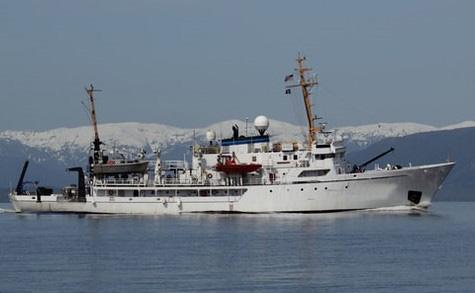
Monel® socket head cap screws are made from a nickel-copper alloy that exhibits high strength, toughness and good corrosion resistance. Renowned for the saltwater corrosion resistance, Monel is the go-to material by the navy. It is often used in many other marine applications for its combination of high strength and seawater resistance. Monel screws are even resistant to rapid moving seawater and will last many years in saltwater conditions.
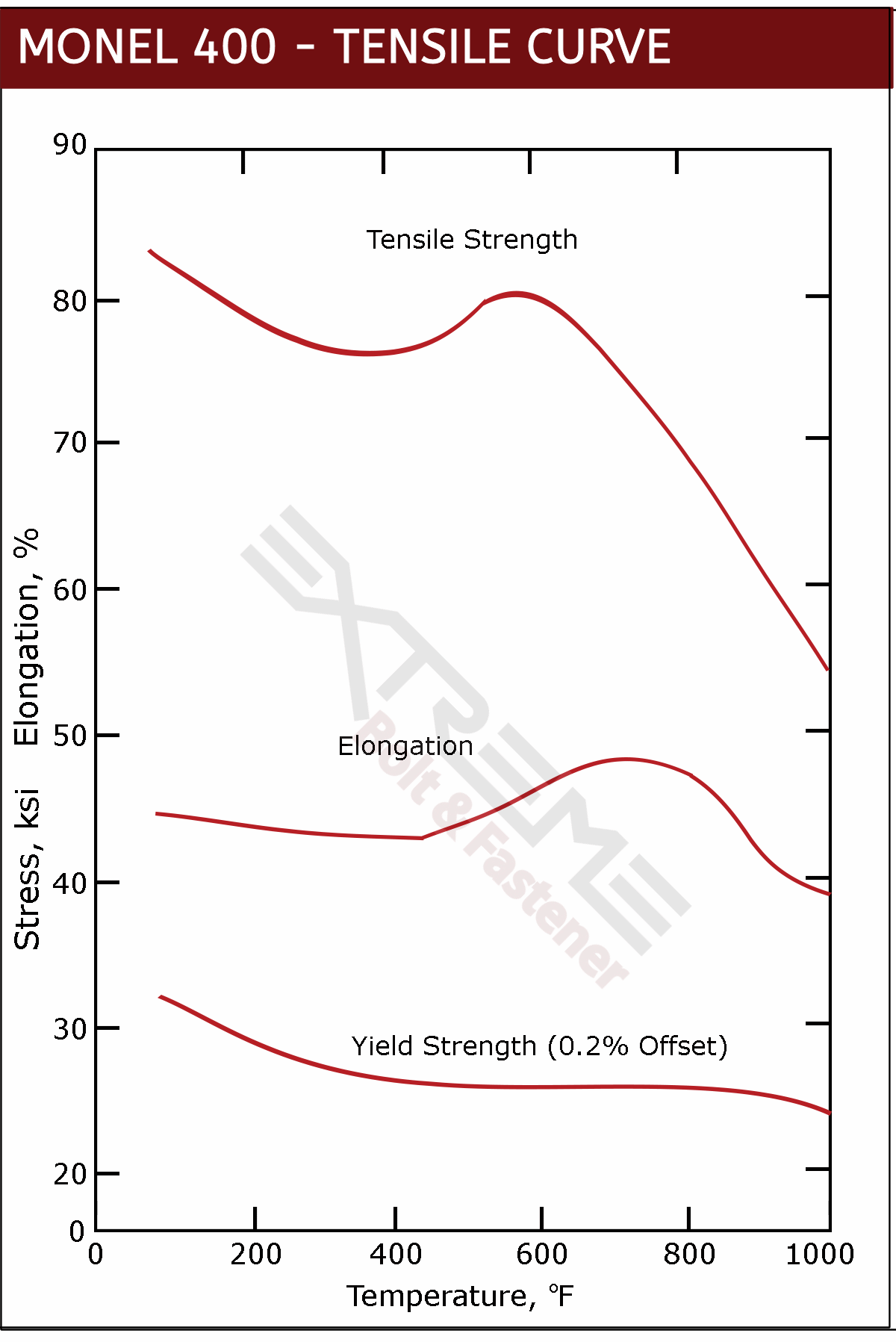
Strength and Toughness from Cryogenic to 1000°F
Monel socket head cap screws offer excellent mechanical properties over a wide temperature range from cryogenic up to 1000°F. In US Navy tear tests at temperatures as low as -320°F, Monel 400 has displayed excellent ductility and toughness. In fact, it has shown little decrease in impact resistance when tested on plates at liquid-hydrogen and liquid-helium temperatures.
Monel K500 is an age hardened alloy, known for extreme strength even at high temps. But it is also excellent for cryogenic service. Monel K500's tensile and yield strength increase - with little or no change to ductility and toughness - even at the temperature of liquid hydrogen.
Excellent Resistance to Hydrofluoric Acid
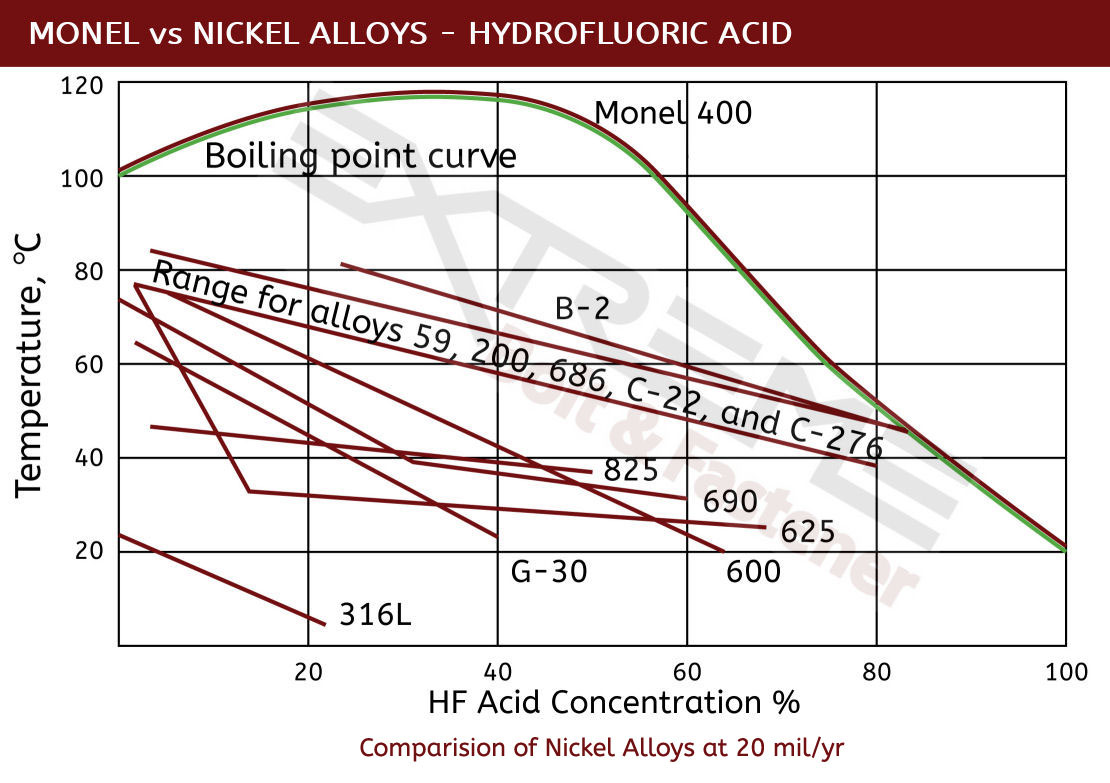
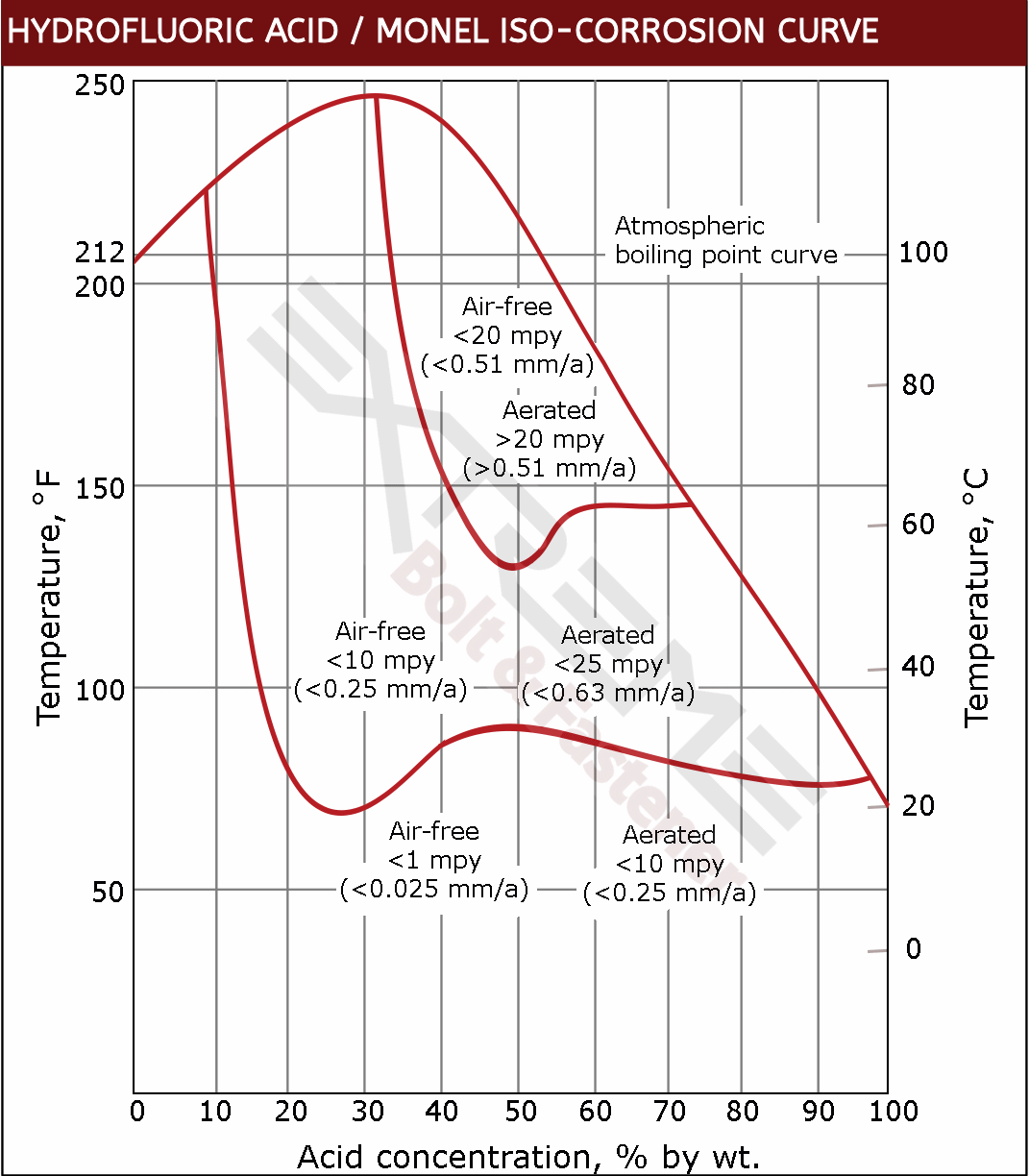
One of the most outstanding characteristics of Monel socket head cap screws is that they offer exceptional resistance to hydrofluoric acid (HF), a particularly tough acid to deal with, in all concentrations up to the boiling point. For hydrofluoric acid applications Monel screws are perhaps the most resistant of all commonly used specialty alloys.
The most common grades of Monel fasteners are Monel 400 (2.4360) and Monel K500 (2.4375) . Gain more insight on these two nickel alloy grades by accessing our Monel 400 and K500 overviews or by contacting our engineering experts.
Common Grades of Monel Fasteners
Monel 400 (2.4360)
Monel 400, UNS N04400 (QQ-N-281), is a nickel-copper alloy with high strength and excellent corrosion resistance in a range of media including sea water, hydrofluoric acid, sulfuric acid, and alkalies. Monel 400 is commonly in marine engineering, chemical and hydrocarbon processing applications.
Monel 400 (2.4360) Specifications: BS3075NA13 (Wire), BS3076NA13 (Bar), ASTM B 164 (Rod, Bar, and Wire), ASTM B 564 (Forgings), ASME SB 164 (Rod, Bar, and Wire), ASME SB 564 (Forgings), AECMA PrEN 2305 (Wire for Rivets), SAE AMS 4675 (Bars and Forgings), SAE AMS 4730 (Wire), SAE AMS 4731 (Wire and Ribbon), DIN 17752 (Rod and Bar), DIN 17753 (Wire), DIN 17754 (Forgings), VdTÜV 263 (Sheet, Plate, Bar, and Tubing), QQ-N-281 (Plate, Sheet, Strip, Bar, Rod, Wire, and Forgings), Werkstoff 2.4360, ASTM F467 (Nuts), ASTM F468 (Bolts, Screws, Studs)
| Monel 400 | Ni+Co | Cu | Fe | Mn | Si | C | S |
|---|---|---|---|---|---|---|---|
| Min % | 63 | 28.0 | - | - | - | - | - |
| Max % | - | 34.00 | 2.50 | 2.00 | 0.50 | 0.30 | 0.024 |
Monel K500 (2.4375)
Monel K500, UNS N05500 (QQ-N-286), is a precipitation-hardenable nickel-copper alloy that combines the corrosion resistance of Monel alloy 400 with greater strength (over 2x as strong) and hardness. It also has low permeability and is nonmagnetic to temperatures as low as -150°F (-101°C).
Monel K500 (2.4375) Specifications: BS3075NA18 (Wire), BS3076NA18 (Rod and Bar), ASTM B 865 (Rod and Bar), DIN 17752 (Rod and Bar), DIN 17753 (Wire), DIN 17754 (Forgings), QQ-N-286 (Rod, Bar, Wire, and Forgings), SAE AMS 4676 (Rod and Bar), ASME Code Case 1192 (Rod and Bar), ISO 9723 (Bar), ISO 9724 (Wire), ISO 9725 (Forgings), Werkstoff 2.4375, ASTM F467 (Nuts), ASTM F468 (Bolts, Screws, Studs)
| Monel K500 | Ni+Co | Cu | Fe | Mn | Si | C | S | Al | Ti |
|---|---|---|---|---|---|---|---|---|---|
| Min % | 63 | 27.0 | - | - | - | - | - | 2.30 | 0.35 |
| Max % | - | 33.00 | 2.00 | 1.50 | 0.50 | 0.25 | 0.010 | 3.15 | 0.85 |
| Monel K500 | Ultimate Tensile Strength | Yield Strength at 0.2% | Elongation % | Usable Temperature Limit |
|---|---|---|---|---|
| Value | 160 ksi | 110 ksi | 45 | 1100°F / 593°C |
| Temperature (°F) | Ultimate Tensile (ksi) | Yield Strength 0.2% Offset (ksi) | Elongation % |
|---|---|---|---|
| Room Temp. | 83 | 32 | 45 |
| 200 | 79 | 30 | 43 |
| 400 | 77 | 27 | 42 |
| 600 | 80 | 27 | 46 |
| 800 | 68 | 26 | 48 |
| 1000 | 54 | 24 | 40 |
| Temperature (°F) | Ultimate Tensile (ksi) | Yield Strength 0.2% Offset (ksi) | Elongation % |
|---|---|---|---|
| Room Temp. | 160 | 110 | 45 |
| 200 | 150 | 108 | 47 |
| 400 | 147 | 105 | 48 |
| 600 | 142 | 103 | 49 |
| 800 | 125 | 102 | 19 |
| 1000 | 95 | 90 | 8 |
| Nominal Designation | Forgings | Castings | Plates | ||||
|---|---|---|---|---|---|---|---|
| 67Ni 30Cu | B564 Gr. N04400 (1) | ... | B127 Gr. N04400 (1) | ||||
| Working Pressures by Classes, psig | |||||||
| Temp., F | 150 | 300 | 400 | 600 | 900 | 1500 | 2500 |
| 20 to 100 | 230 | 600 | 800 | 1200 | 1800 | 3000 | 5000 |
| 200 | 200 | 525 | 700 | 1050 | 1575 | 2630 | 4380 |
| 300 | 190 | 490 | 655 | 980 | 1470 | 2450 | 4080 |
| 400 | 180 | 475 | 630 | 945 | 1420 | 2365 | 3940 |
| 500 | 170 | 475 | 630 | 945 | 1420 | 2365 | 3940 |
| 600 | 140 | 475 | 630 | 945 | 1420 | 2365 | 3940 |
| 650 | 125 | 475 | 630 | 945 | 1420 | 2365 | 3940 |
| 700 | 110 | 470 | 625 | 940 | 1410 | 2350 | 3920 |
| 750 | 95 | 465 | 620 | 930 | 1395 | 2330 | 3880 |
| 800 | 80 | 460 | 610 | 915 | 1375 | 2290 | 3820 |
| 850 | 65 | 375 | 505 | 755 | 1130 | 1885 | 3145 |
| 900 | 50 | 275 | 365 | 550 | 825 | 1370 | 2285 |
Monel fastener styles
Monel Screws
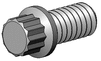


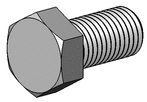
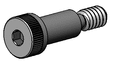


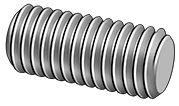
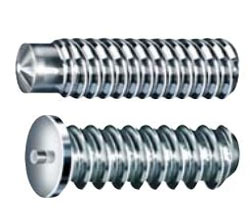
Monel Studs & Threaded Rods

Monel Washers


Monel - Frequently Asked Questions
Answers from our engineers, drawn from the Monel technical questions we're asked most.
Specialty Bolts for Crevice Corrosion
Q: Why is saltwater crevice corrosion so tough on metals? A: Saltwater contains chlorides that can be highly corrosive to many various metals including common grades of stainless steel. The most common corrosion concern in saltwater is crevice corrosion. This happens when saltwater gets trapped and remains stagnant in tight spaces like the threads of a bolt. In these crevices, and localized high concentrations of chlorides could exist which accelerate corrosion. Fortunately, there are some specialized metals that are ideal in preventing salt water crevice corrosion and minimizing its impact. These include: Titanium Bolts Titanium grade 2 and the stronger grade 5 are almost inert to salt water environments in both rapid and stagnant sea water. AL6XN Bolts Developed for use in salt water, AL6XN is a 6 Moly stainless alloy. This means it is composed of a minimum of 6% molybdenum, making it more corrosion resistant than standard grades of stainless. AL6XN bolts offer excellent resistance to pitting and crevice corrosion. Duplex Bolts Duplex steels (both Duplex 2205 and Super Duplex 2507) offer improved corrosion protection compared to 300 series stainless, especially in terms of localized corrosion such as crevice and pitting. Though Duplex bolts are not as robust as titanium or AL6XN in salt water, they are an excellent economic solution. MonelRenowned for its resistance to saltwater, Monel bolts are the go-to material for many naval vessels. Monel fasteners are available in two grades Monel 400 and Monel K500. Both grades are extremely resistant to saltwater, with K500 Monel offering twice the strength.
Can I or should I passivate a nickel alloy bolts?
Passivation is a chemical process which removes free iron from stainless steels. This creates a more robust surface or a “passive” surface to minimize corrosion and rust on the surface of a fastener. We do not recommend passivating nickel alloys, as nickel alloys are innately corrosion resistant and do not require passivation to improve the surface properties. On materials like Hastelloy C276 or Inconel bolts, passivation does not improve the surface. Furthermore, depending on the exact passivation method, passivation could severely damage Monel screws (a nickel copper alloy)
Military Fasteners: Materials, Specs & DFARS
Military fasteners can require stringent specs and traceability. In this post, we’ll break down common materials used, explain DFARS compliance and touch on some frequently used military specifications.
Common Materials
17-4PH
For purely high strength, 17-4PH bolts are an ideal choice for military applications. 17-4PH bolts can heat treated to several aged conditions which offer different levels of strength and hardness.
The US Airforce relies on A286 screws for high strength and oxidation resistance to temperatures up to 1300°F.
Inconel 718
Inconel 718 bolts are critical for many aerospace builds for their extreme strength in heat.
Monel
Monel bolts are a go-to material for many naval projects. Both grades offer superior resistance to seawater, while Monel K500 bolts provide 3 times the yield strength and twice tensile strength of Monel 400 bolts. Federal material specifications: QQ-N-281 (Monel 400) and QQ-N-286 (Monel K500).
Stainless Steel
Stainless steel bolts in grades 18-8, 304, and 316 play a large role in military applications. They provide a basic, economic solution for saltwater resistance and strength.
Titanium
Many arms of the military look to titanium bolts. Naval applications use titanium for unmatched seawater resistance, while the Air Force relies on titanium screws for their superior strength-weight ratio: helping them build lighter and more fuel efficient aircraft.
DFAR: What it is & Why it matters
If your fastener is destined for a military project, you’ll likely need DFARS-compliant materials. DFAR is a requirement published by the DOD that restricts how specialty metals are sourced — stating materials must come from the U.S. or approved allied country. Click here for a full list of countries.
In practical terms, this means:
• Rules for material origin and traceability.
• Materials come with proper certification and documentation.
• Quality and accountability are ensured for critical applications.
What is a Mil Spec Fastener?
Military fasteners are designed and manufactured to defined standards developed by the U.S. government that cover everything from material chemistry and mechanical properties to dimensional tolerances, finishes, and test requirements. There are countless Mil Specs but here are some of the most common for fasteners.
• MIL-DTL-1222 — covers a range of hex bolts, cap screws, studs, and nuts produced in nickel alloys, corrosion resistant steels (CRES), titanium, and aluminum. Note this spec supersedes outdated specs MIL-B-857 and MIL-S-1222.
• FF-S-86 — defines requirements for socket head cap screws.
• FF-W-92 — provides standards for plain flat washers
• FF-S-92C— covers flat heads, round heads, fillister heads, pan heads and truss heads with slotted, cross-recessed and hexagon head machine screws.
• MIL-DTL-18240 —is a common spec for self-locking elements for screws, including plug (-N), strip (-L) and patch (-P).
What does the spec ASTM B164 apply to and can you produce hex heads per this spec? I believe it is for Monel bolts?
Monel bolts per ASTM B164 applies to both Monel 400 and Monel grade 405. This specification standardizes the different processing techniques for each of these materials in the form of hot-worked and cold-worked rod and bar, as well as cold-worked wire.
Can you provide me the dimension specs of an MIL-DTL-25027 5/8″-11 Monel 400 nut?
MIL-DTL-25027 (superseded by spec NASM25027 ) focuses on the performance criteria of the locking mechanism of the nut. This spec isn’t for the dimensions/configuration of the nut.
What is the difference between Inconel and Monel?
Both Monel and Inconel are nickel alloys but that is where the similarity ends. Briefly, Monel bolts are mostly used for saltwater corrosion resistance and high strength. They also offer excellent resistance to HF (hydrofluoric acid). Inconel is known for its strength and high temperature usability. Grades 625 and 718 also offer excellent corrosion resistance to harsh acids.
More on Monel
What our customers say
More customer feedback“I purchased from you specifically because of Jon’s expertise and professionalism.”
“Very impressed; good prices and delivered earlier than lead time given, which was a real bonus.”
“Extreme Bolt is definitely on my go-to list.”