

Hastelloy C276 Fasteners - Bolts, Screws & Nuts
Last updated
A high performace nickel alloy used for severe corrosion environments

Need help choosing a material?

- Excellent corrosion resistance to sulfuric & hydrochloric acids
- Good mechanical properties at elevated temperatures
- C276, B2, B3, C22, Hastelloy X chemistry & specs
- Hastelloy C276 Datasheet
Hastelloy Fastener Overview
Hastelloy fasteners such as bolts, screw, nuts and threaded rods are ideally suited for a wide variety of medium to severe corrosive acid environments. The most common grade for Hastelloy fasteners is Hastelloy C276 (2.4819), which is the one of the most versatile of the corrosion resistant nickel alloys – exceeding that of Inconel or Monel. Hastelloy fasteners are also available in other specialty grades that can address more niche corrosion issues. Hastelloy is often used for applications involving:
- Sulfuric and hydrochloric acid (H2SO4 & HCl)
- Sour gas
- Chlorides, wet chloride gas and chlorine solutions
- Solvents
- Formic and acetic acids

- Acetic anhydride
- Hypochlorites
- Phosphoric acid
Because Hastelloy fasteners are resistant to some of the most severe chemicals, this very material often finds use in oil & gas sour gas service, chemical processing, power industries flue gas desulfurization systems, off-shore oil and down hole environments, pulp & paper bleaching and digesters, as well as other industrial facets where corrosion is an issue.
If you not sure which material is best for your application our team of engineers have decades of materials expertise and industrial experience that can help assist you in selecting the best Hastelloy fastener for your application. Other resources include: Hastelloy Torque Spec, Flange Dimensions, Flange Bolting Chart, Material Selection Tool
Common Hastelloy Bolt Grades
Confused about which grade of Hastelloy bolts are best for your corrosive application? Read this short blog post which gives an overview of each grade's strength. If you need more in-depth direction or contact our engineering team for expert guidance.
HASTELLOY C276 (2.4819)
Hastelloy C276 alloy, UNS N10276, 2.4819, is the most widely used and versatile corrosion resistant nickel alloy. Hastelloy fasteners offer very good resistance to strong reducing and moderately oxidizing corrosive acids, as well excellent stress corrosion cracking resistance and resistance to localized attack. Outstanding corrosion resistance to various concentrated, hot acids and reducing environments, C276 fasteners are readily used in hot sulfuric and hydrochloric acid applications. Hastelloy's resistance to sulfuric acid makes it a common choice for protection from hydrogen sulfide (H2S), more commonly known as sour gas.In addition, Hastelloy C276 is one of the few grades resistant to wet chloride gas and chlorine dioxide. The Hastelloy C276 grade also offers excellent mechanical properties at elevated temperatures up to 1500°F / 815°C, making it ideal for hot corrosive environments. Because of these properties, Hastelloy C276 fasteners have resistance to a wide range of acids, chlorides, and strong halides which is why they are often utilized in the chemical processing and the oil & gas industries. The only factor that is critical to point out when dealing with very strong oxidizing environments like nitric acid is that Hastelloy C276 fasteners can be attacked as it has a low chromium content compared to other grades like Hastelloy C22. For more indepth material information, download our Hastelloy C276 Datasheet.
C276 Corrison Data & Iso-Corrosion Curves
HASTELLOY C276 SPECIFICATIONS: N10276, ASTM B574, ASME SB574, Werkstoff 2.4819, ASTM G28-A/B, EN 10204-3.1, ASME B18.2.2, ASTM B619, ASME SB619, ASTM B366, ASME SB366, WPHC276, ASME B16.11, ASTM B564/ASME SB564, COLD DRAWN, HOT FINISHED, ASTM B575, ASME SB575, COLD ROLLED, HOT ROLLED, ASME B16.9, ASME B16.5, ASTM B462, ASME SB462, ASTM F467 (Nuts), ASTM F468 (screws, bolts, studs)
| Hastelloy C276 | Ni | Mo | Cr | Fe | W | Co | Mn | V | Si | P | S | C |
|---|---|---|---|---|---|---|---|---|---|---|---|---|
| Min % | BAL | 15.0 | 14.5 | 4.0 | 3.0 | - | - | - | - | - | - | - |
| Max % | 17.0 | 16.5 | 7.0 | 4.5 | 2.50 | 1.00 | 0.35 | 0.08 | 0.04 | 0.03 | 0.01 |
HASTELLOY B2 (2.4617)
Hastelloy B2 alloy, UNS N10665, offers excellent resistance to hydrochloric acid in all temperatures and concentrations, yet has poor corrosion resistance to oxidizing chemicals and in the presence of ferric or cupric salts. In addition, Hastelloy B2 has excellent resistance to pitting, stress corrosion cracking, and to knife-line and heat-affected zone attack. However B2 has little chromium, and it should NOT be used with oxidizing media in the presence of salts. Like other Hastelloy alloys, B2 fasteners can be used in the as-welded condition because they resist the formation of grain-boundary carbide precipitates in the weld heat-affected zone. It is recommended that B2 fasteners not be utilized between 1000° F and 1600° F because of a reduction in the ductility.
B2 Corrison Data & Iso-Corrosion Curves
HASTELLOY B2 SPECIFICATIONS: N10665, ASTM B619, Werkstoff 2.4617, ASME SB619, ANNEALED, B/SB619 CLASS I OR II, X-RAY PER ASME SECTION VIII DIVISION 1 UW-51, MERCURY FREE, EN 10204-3.1, ASTM B366, ASME SB366, WPHB2-S, ASME B16.11, ASTM B335, ASME SB335, ASME B16.3, MSS SP-83, ASTM B564/ASME SB564, COLD DRAWN, HOT FINISHED, ASTM B333, ASME SB333, SHEET IS COLD ROLLED, HOT ROLLED, ENIMO-7, AWS A-5.11, ASME SFA-5.11
| Hastelloy B2 | Ni | Mo | Fe | Cr | Co | Mn | P | Si | S | C |
|---|---|---|---|---|---|---|---|---|---|---|
| Nominal % | BAL | 26-30 | 2 Max | 1 Max | 1 Max | 1 Max | 0.040 | 0.10 | 0.030 Max | 0.020 Max |
HASTELLOY B3 (2.4600)
Hastelloy B3 alloy, UNS N10675, is specifically designed to deal with very aggressive hydrochloric acid (HCl), hyrdrobromic acid (HBr) and sulfuric acids (H2SO4) as well as acetic, formic and phosphoric acids. Hastelloy B3 fasteners deliver the same excellent resistance to hydrochloric acid and other strongly reducing chemicals as other B-alloys (including B2) but with significantly enhanced thermal stability and improved ease of fabrication. However B3 has little chromium, and it should NOT be used with oxidizing media and is not recommended for use in the presence of ferric or cupric salts which can cause rapid corrosion failure.
B3 Corrison Data & Iso-Corrosion Curves
HASTELLOY B3 SPECIFICATIONS: N10675, ASTM B366, ASME SB366, Werkstoff 2.4600, WPHB3-W, ASME B16.9, ANNEALED, MERCURY FREE, EN 10204-3.1 (W/O X-RAY), ASTM B335, ASME SB335, ASTM B564, ASME SB564, DIMENSIONS PER ASME B16.5, ASTM B462, ASME SB462, ASME B16.5, COLD DRAWN, HOT FINISHED, ASTM B626, ASME SB626, B/SB626 CLASS III, ASTM B333, ASME SB333, COLD ROLLED, HOT ROLLED
| Hastelloy B3 | Ni | Mo | Fe | Cr | Co | Mn | P | Si | S | C | W |
|---|---|---|---|---|---|---|---|---|---|---|---|
| Nominal % | 65 Min | 28.5 | 1.5 | 1.5 | 3 Max | 1 Max | 0.040 | 0.10 | 0.030 Max | 0.020 Max | 0.020 Max |
HASTELLOY C22 (2.4602)
Hastelloy C22 alloy, UNS N06022, has better overall corrosion resistance in oxidizing corrosives than C-276 and Inconel 625 alloys due to the higher chromium content. More specifically, C22 fasteners provides better protection when used in certain saturated wet chlorine environments. In addition, its high chromium content provides C22 fasteners much better resistance to oxidizing media that C276. This provides it exceptional resistance to chloride-induced pitting although, in most cases because of its availability, C-276 fasteners are a more cost-effective option. Hastelloy C22 fasteners also offer outstanding resistance to pitting and crevice corrosion, as well as stress corrosion cracking. Use of C22 fasteners should be limited to temperatures below 1250° F. This alloy has limited availability and can be made into fastener in larger diameters only (1/2" and greater in size).
C22 Corrison Data & Iso-Corrosion Curves
HASTELLOY C22 SPECIFICATIONS: SB 575/B 575, SB 574/B 574, SB 366/B 366 SB 462/B 462, SB 564/B 564 SB 462/B 462, Werkstoff 2.4602, 17744 No. 2.4602 NiCr21Mo14W, NACE MR0175 ISO 15156
| Hastelloy C22 | Ni | Mo | Cr | Fe | W | Co | Mn | Cu | V | Si | C |
|---|---|---|---|---|---|---|---|---|---|---|---|
| Nominal % | 56 BAL | 13.0 | 22.0 | 3.0 | 3 Max | 2.5 Max | 0.5 Max | 0.5 Max | 0.35 Max | 0.08 Max | 0.01 Max |
HASTELLOY C2000 (2.4675)
Hastelloy C2000 alloy, UNS N06200, is a corrosion resistant alloy with excellent resistance to uniform corrosion in oxidizing or reducing environments. Hastelloy C2000 fasteners combine the outstanding resistance to oxidizing media of C276 with superior resistance to non-oxidizing environments, making it a unique alloy for protecting chemical process equipment that has a range of conditions. C2000 fasteners are designed to offer greater versatility compared to the other Hastelloy alloys. The addition of copper provides C2000 fasteners enhanced temperature capability in sulfuric acid, hydrofluoric acid, and dilute hydrochloric acid. Due to its high chromium content protects process streams contaminated with ferric ions. In addition, C2000 fasteners have excellent resistance to stress corrosion cracking and superior resistance to localized corrosion as compared to C-276 alloy.
C2000 Corrison Data & Iso-Corrosion Curves
HASTELLOY C2000 SPECIFICATIONS: SB 575/B 575, SB 574/B 574, SB 366/B 366 SB 462/B 462,SB 564/B 564 SB 462/B 462, Werkstoff 2.4675, NACE MR0175 ISO 15156
| Hastelloy C2000 | Ni | Mo | Cr | Fe | Co | Cu | Mn | Al | Si | C |
|---|---|---|---|---|---|---|---|---|---|---|
| Nominal % | 59 BAL | 16.0 | 23.0 | 3 Max | 2 Max | 1.6 | 0.5 Max | 0.5 Max | 0.08 | 0.01 Max |
HASTELLOY X (2.4665)
Alloy X, UNS N06002, is most known for its exceptional combination of high temperature oxidation resistance up to 2000°C and high temperature strength. Being stable, strong and ductile at high temperatures are its most notable characteristics which is often utilized in gas turbine components and furnace components.
HASTELLOY X SPECIFICATIONS: AMS 5536, AMS 5754, AMS 5798, ASME SB 435, ASME SB 572, ASME Sect. IX P No. 43, ASME Section IX P No. 43, ASME SFA 5.14, ASTM B 435, ASTM B 572, EN 2.4665, GE B50A436, GE B50T83, GE B50TF24, PDS 1038 (X-low), PDS 15102QFC, UNS N06002, Werkstoff 2.4665
| Hastelloy X | Ni | Cr | Fe | Mo | Co | W | Mn | Ti | Si | Al | C | Cu | P | S | B |
|---|---|---|---|---|---|---|---|---|---|---|---|---|---|---|---|
| Min % | BAL | 20.5 | 17.0 | 8.0 | 0.5 | 0.2 | - | - | - | - | 0.05 | - | - | - | - |
| Max % | 23.0 | 20.0 | 10.0 | 2.50 | 1.0 | 1.0 | 1.00 | 1.00 | 0.50 | 0.15 | 0.05 | 0.04 | 0.03 | 0.01 |

| Temperature (°F) | Ultimate Tensile (ksi) | Yield Strength 0.2% Offset (ksi) | Elongation % |
|---|---|---|---|
| Room Temp. | 107 | 49 | 72 |
| 400 | 95 | 38 | 69 |
| 600 | 90 | 33 | 67 |
| 800 | 89 | 30 | 65 |
| 1000 | 85 | 31 | 63 |
| 1200 | 80 | 30 | 62 |
| 1400 | 68 | 27 | 78 |
| Temperature (°F) | Ultimate Tensile (ksi) | Yield Strength 0.2% Offset (ksi) | Elongation % |
|---|---|---|---|
| Room Temp. | 111 | 52 | 70 |
| 200 | 105 | 45 | 72 |
| 400 | 96 | 38 | 84 |
| 600 | 92 | 34 | 79 |
| 800 | 89 | 31 | 79 |
| 1000 | 84 | 29 | 80 |
| 1200 | 80 | 28 | 80 |
| 1400 | 72 | 29 | 77 |
| Temperature (°F) | Ultimate Tensile (ksi) | Yield Strength 0.2% Offset (ksi) | Elongation % |
|---|---|---|---|
| Room Temp. | 131 | 59 | 61 |
| 400 | 126 | 52 | 60 |
| 600 | 122 | 49 | 60 |
| 800 | 119 | 46 | 61 |
| Temperature (°F) | Ultimate Tensile (ksi) | Yield Strength 0.2% Offset (ksi) | Elongation % |
|---|---|---|---|
| 200 | 105 | 46 | 70 |
| 400 | 98 | 41 | 69 |
| 600 | 89 | 35 | 73 |
| 800 | 88 | 31 | 73 |
| 1000 | 85 | 31 | 75 |
| 1200 | 80 | 30 | 71 |
| Temperature (°F) | Ultimate Tensile (ksi) | Yield Strength 0.2% Offset (ksi) | Elongation % |
|---|---|---|---|
| Room | 111 | 55 | 44 |
| 1000 | 89 | 36 | 49 |
| 1200 | 84 | 35 | 54 |
| 1400 | 67 | 34 | 53 |
| 1600 | 45 | 28 | 59 |
| 1800 | 26 | 13 | 66 |
| 2000 | 14 | 6 | 60 |
| Nominal Designation | Forgings | Castings | Plates | ||||
|---|---|---|---|---|---|---|---|
| 54Ni 16Mo 15Cr | B462 Gr. N10276 | ... | B575 Gr. N10276 (1), (2) | ||||
| 60Ni 22Cr 9Mo 3.5Cb | B564 Gr. N06625 | ... | B443 Gr. N06625 (3), (5) | ||||
| 42Ni 21.5Cr 3Mo 2.3Cu | B564 Gr. N08825 | B424 Gr. N08825 (3),(7) | |||||
| Working Pressures by Classes, psig | |||||||
| Temp., F | 150 | 300 | 400 | 600 | 900 | 1500 | 2500 |
| 20 to 100 | 290 | 750 | 1000 | 1500 | 2250 | 3750 | 6250 |
| 200 | 260 | 750 | 1000 | 1500 | 2250 | 3750 | 6250 |
| 300 | 230 | 730 | 970 | 1455 | 2185 | 3640 | 6070 |
| 400 | 200 | 700 | 930 | 1395 | 2095 | 3490 | 5820 |
| 500 | 170 | 665 | 885 | 1330 | 1995 | 3325 | 5540 |
| 600 | 140 | 605 | 805 | 1210 | 1815 | 3025 | 5040 |
| 650 | 125 | 590 | 785 | 1175 | 1765 | 2940 | 4905 |
| 700 | 110 | 570 | 755 | 1135 | 1705 | 2840 | 4730 |
| 750 | 95 | 530 | 710 | 1065 | 1595 | 2660 | 4430 |
| 800 | 80 | 510 | 675 | 1015 | 1525 | 2540 | 4230 |
| 850 | 65 | 485 | 650 | 975 | 1460 | 2435 | 4060 |
| 900 | 50 | 450 | 600 | 900 | 1350 | 2245 | 3745 |
| 950 | 35 | 385 | 515 | 775 | 1160 | 1930 | 3220 |
| 1000 | 20 | 365 | 485 | 725 | 1090 | 1820 | 3030 |
| 1050 | ... | 360 | 480 | 720 | 1080 | 1800 | 3000 |
| 1100 | ... | 325 | 430 | 645 | 965 | 1610 | 2685 |
| 1150 | ... | 275 | 365 | 550 | 825 | 1370 | 2285 |
| 1200 | ... | 205 | 275 | 410 | 615 | 1030 | 1715 |
| 1250 | ... | 165 | 220 | 330 | 495 | 825 | 1370 |
| 1300 | ... | 120 | 160 | 240 | 360 | 600 | 1000 |
| Media | Concentration, Percent By Weight | Test Temperature °F (°C) | Average Corrosion Rate Per Year, mils* | |||
|---|---|---|---|---|---|---|
| 625 alloy | C-22® alloy | C-276 alloy | G-30® alloy | |||
| Acetic Acid | 99 | Boiling | <1 | Nil | <1 | 1 |
| Ferric Chloride | 10 | Boiling | 7325 | 1 | 2 | -- |
| Formic Acid | 88 | Boiling | 9 | <1 | 1 | 2 |
| Hydrochloric Acid | 1 | Boiling | 1 | 3 | 13 | 1 |
| 1.5 | Boiling | 353 | 14 | 32 | -- | |
| 2 | 194 (90) | Nil | Nil | 1 | -- | |
| 2 | Boiling | 557 | 61 | 51 | -- | |
| 2.5 | 194 (90) | 72 | <1 | 12 | -- | |
| 2.5 | Boiling | 605 | 141 | 85 | -- | |
| 10 | Boiling | 642 | 400 | 288 | 2364 | |
| Hydrochloric Acid + 42 g/l Fe2(SO4)3 | 1 | 200 (93) | 238 | 2 | 41 | 803 |
| 5 | 150 (66) | 2 | 2 | 5 | 557 | |
| Hydrochloric Acid + 2% HF | 5 | 158 (70) | 123 | 59 | 26 | 97 |
| Hydrofluoric Acid | 2 | 158 (70) | 20 | 9 | 9 | 10 |
| 5 | 158 (70) | 16 | 14 | 10 | 11 | |
| P2O5 (Commercial Grade) | 39 | 185 (85) | 1 | 2 | 9 | -- |
| 44 | 240 (116) | 23 | 21 | 100 | -- | |
| 52 | 240 (116) | 12 | 11 | 33 | -- | |
| P2O5 + 2000 ppm Cl | 38 | 185 (85) | 2 | 1 | 12 | -- |
| P2O5 + 0.5% HF | 38 | 185 (85) | 9 | 7 | 45 | -- |
| Nitric Acid | 10 | Boiling | <1 | <1 | 7 | <1 |
| 65 | Boiling | 21 | 134 | 888 | 5 | |
| Nitric Acid + 6% HF | 5 | 140 (60) | 73 | 67 | 207 | -- |
| Nitric Acid + 25% H2SO4 + 4% NaCl | 5 | Boiling | 713 | 12 | 64 | -- |
| Nitric Acid + 1% HCl | 5 | Boiling | 1 | <1 | 8 | -- |
| Nitric Acid + 2.5% HCl | 5 | Boiling | <1 | 2 | 21 | -- |
| Nitric Acid + 15.8% HCl | 8.8 | 126 (52) | >10,000 | 4 | 33 | 14 |
| Sulfuric Acid | 10 | Boiling | 37 | 12 | 19 | 31 |
| 20 | 150 (66) | <1 | <1 | <1 | -- | |
| 20 | 174 (79) | <1 | 1 | 3 | <1 | |
| 20 | Boiling | 91 | 33 | 39 | 54 | |
| 30 | 150 (66) | <1 | <1 | 1 | <1 | |
| 30 | 174 (79) | <1 | 3 | 4 | <1 | |
| 30 | Boiling | 227 | 64 | 55 | 60 | |
| 40 | 100 (38) | <1 | <1 | <1 | <1 | |
| Sulfuric Acid | 40 | 150 (66) | 1 | <1 | 1 | <1 |
| 40 | 174 (79) | 35 | 9 | 10 | 2 | |
| 50 | 100 (38) | 1 | <1 | Nil | <1 | |
| 50 | 150 (66) | 25 | 1 | 4 | <1 | |
| 50 | 174 (79) | 58 | 16 | 12 | 10 | |
| 60 | 100 (38) | <1 | <1 | <1 | <1 | |
| 70 | 100 (38) | <1 | Nil | Nil | <1 | |
| 80 | 100 (38) | <1 | Nil | <1 | -- | |
| Sulfuric Acid + 0.1% HCl | 5 | Boiling | 151 | 26 | 33 | -- |
| Sulfuric Acid + 0.5% HCl | 5 | Boiling | 434 | 61 | 49 | -- |
| Sulfuric Acid + 1% HCl | 10 | 158 (70) | 121 | <1 | 11 | -- |
| 10 | 194 (90) | 326 | 94 | 45 | -- | |
| 10 | Boiling | 869 | 225 | 116 | -- | |
| Sulfuric Acid + 2% HF | 10 | Boiling | 55 | 29 | 22 | 53 |
| Sulfuric Acid + 200 ppm Cl- | 25 | 158 (70) | 110 | 11 | 12 | -- |
| 25 | Boiling | 325 | 215 | 186 | 101 | |
| Sulfuric Acid +1.2% HCl + 1% FeCl3 + 1% CuCl2 | 11 | Boiling | 1815 | 3 | 42 | 1227 |
| Sulfuric Acid +1.2% HCl + 1% FeCl3 + 1% CuCl2 (ASTM G28B) | 23 | Boiling | 2721 | 8 | 55 | -- |
| Sulfuric Acid +42 g/l Fe2(SO4)3 (ASTM G28B) | 50 | Boiling | 23 | 40 | 250 | 7 |
*To convert mils per year (mpy) to mm per year, divide by 40 | ||||||

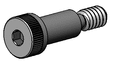
Hastelloy C276 fastener styles
Hastelloy C276 Screws


Hastelloy C276 Bolts


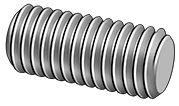
Hastelloy C276 Studs & Threaded Rods

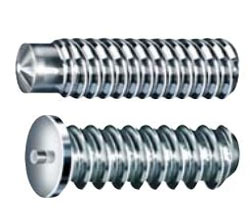
Hastelloy C276 Washers


Hastelloy C276 Hose Clamps

Hastelloy C276 - Frequently Asked Questions
Answers from our application engineers to the questions we hear most about Hastelloy hardware.
What is the difference between Hastelloy C276 and C22 fasteners?
Are Hastelloy C276 bolts suitable for sour gas (H2S) service?
When should I choose Hastelloy B2 or B3 instead of C276?
How does Hastelloy compare to Inconel and Monel for corrosion resistance?
What Hastelloy fastener sizes are in stock, and what are lead times?
Do Hastelloy fasteners gall, and what torque should I use?
Is Hastelloy C276 magnetic, and how hot can it run?
Can you certify Hastelloy fasteners to ASTM F467 / F468 or MIL specifications?
Related reading — updated daily
What our customers say
More customer feedback“I purchased from you specifically because of Jon’s expertise and professionalism.”
“Very impressed; good prices and delivered earlier than lead time given, which was a real bonus.”
“Extreme Bolt is definitely on my go-to list.”
