Flanges
Last updated
Made of specialty metals, polymers and ceramics
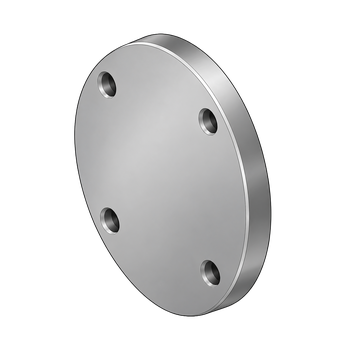
Blind Flanges
Blind flanges seal a flanged connection in piping or process equipment. They are often tapped for instrumentation ports and used to access or maintain equipment.
- Sizes
- ½″ – 24″
- Standards
- ANSIDINJIS
- Specifications
- ASME B16.5DIN 2527
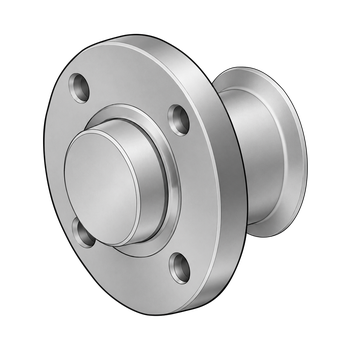

Lap Joint Flanges
Lap joint flanges fit over a pipe with a flared or stub end, letting the flange swivel freely to align bolt holes — ideal for systems whose layout may change or that are frequently disassembled. Their biggest advantage is connecting expensive alloy piping: the wetted stub end can be made from the costly alloy while the backing flange is made from a more common, less-expensive alloy.
- Sizes
- ½″ – 24″
- Standards
- ANSIDINJIS
- Specifications
- ASME B16.5DIN 2641 / 2642
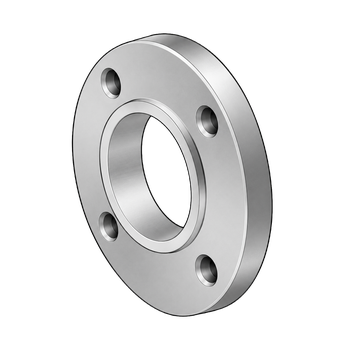

Slip-On Flanges
Slip-on flanges slip over a pipe and are welded in place. Because they swivel freely before welding, bolt holes are easy to align prior to installation.
- Sizes
- ½″ – 24″
- Standards
- ANSIDINJIS
- Specifications
- ASME B16.5DIN 2573, 2576, 2502, 2503
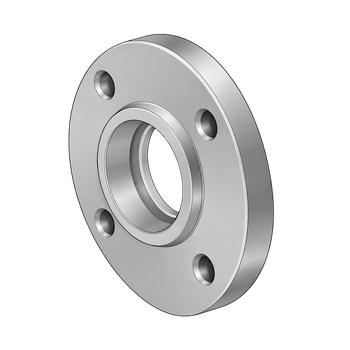

Socket Weld Flanges
Socket weld flanges have an internal stop that supports the pipe during welding — the pipe seats against the stop and is then fillet-welded. Similar to a slip-on flange, but with a higher-strength connection.
- Sizes
- ½″ – 24″
- Standards
- ANSIDINJIS
- Specifications
- ASME B16.5
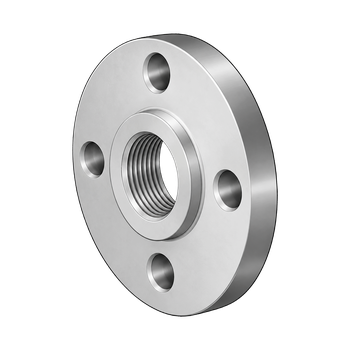

Threaded Flanges
Threaded flanges screw onto male NPT pipe with no welding required, so they can be installed and removed easily. They are used primarily for smaller-diameter pipe.
- Sizes
- ½″ – 24″
- Standards
- ANSIDINJIS
- Specifications
- ASME B16.5DIN 2625–2629
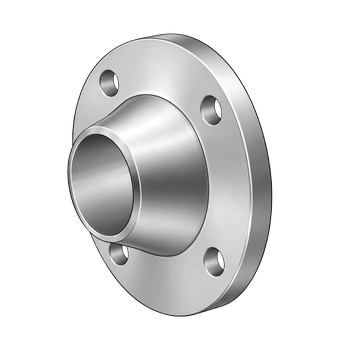

Weld Neck Flanges
a.k.a. Butt Weld FlangesWeld neck flanges are welded directly to the pipe at the neck of the flange. The beveled neck forms a trough for a strong butt weld, making them the choice for high-pressure applications.
- Sizes
- ½″ – 24″
- Standards
- ANSIDINJIS
- Specifications
- ASME B16.5DIN 2627–2638
Engineering references: flange bolting chart (ASME B16.5), flange dimensions by class, and the fastener torque chart for stud tightening.