Titanium Fasteners - Bolts, Screws & Nuts
Last updated
Unique for its strength, lightness of weight and corrosion resistance

Need help choosing a material?
In stock
Buy titanium hose clamps onlineGrade 2 worm-drive clamps, SAE #10 through #80, with no minimum order. Shop the range.
- Excellent strength to weight ratio
- Practically inert to chloride, chlorines and seawater
- Mechanical Properties: tensile, yield & elongation charts
- Titanium Grade 2, 5, 7 and 23 chemistry & specifications
- Datasheets for Grade 2 and Grade 5
Titanium fasteners are best known for being strong, lightweight, and corrosion resistant. They are critical to many industries including chlor alkali, marine, off-shore oil & gas, desalination, medical, and pulp and paper. Grade 2 and 5 are the most commonly used grades of titanium screws:
- Grade 2 (UNS R50400 / 3.7035) :Commercially pure titanium and the most common grade for screws.
- Grade 5 (UNS R56400 / 3.7165): Superior strength-to-weight ratio for a unique combination of corrosion and high strength.
Corrosion Resistance
Saltwater
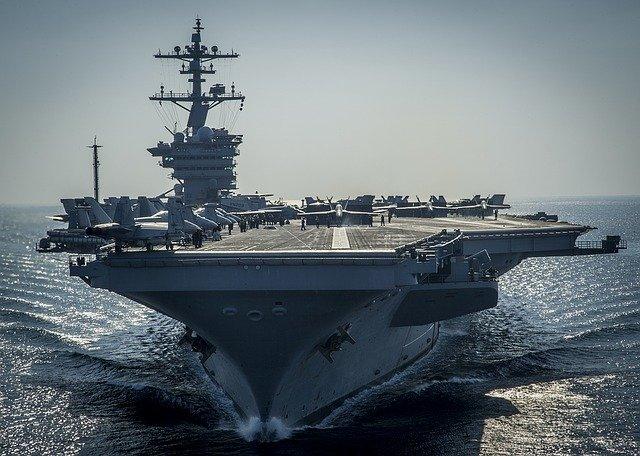
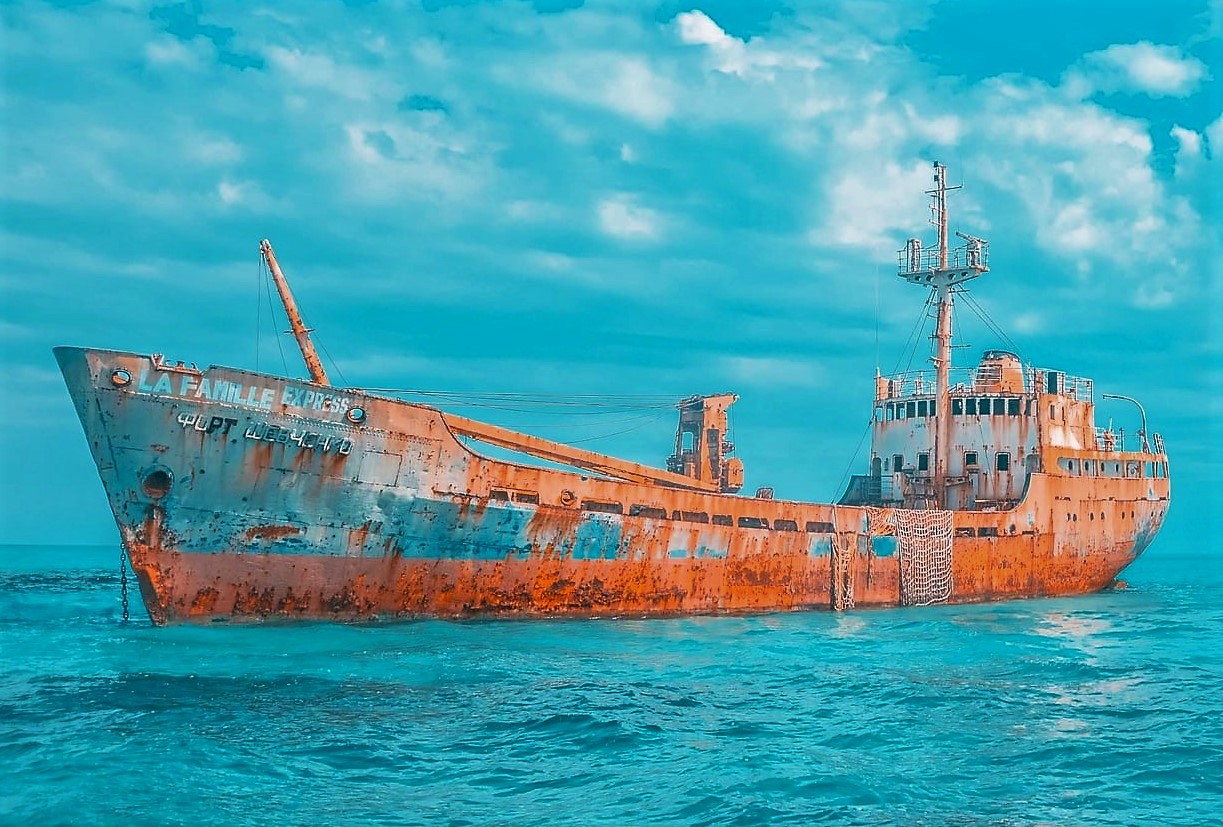
Perhaps the most notable attribute of titanium fasteners are their superior corrosion resistance to salt water / seawater. Titanium screws have the unique ability to rapidly regrow their protective passive layer in the presence of oxygen, giving them unparalleled resistance to salt water environments.
- Proven resistance in decades of polluted seawater
- Usable in ocean depths of a mile beneath the surface
- Resistant to high velocity, rapidly moving currents as well as stagnant seawater
- Not affected by the presence of sulfides in seawater
- Ideal for sea splash and tide zones
- Seawater resistant to temperatures as high as 500°F (260°C)
Chloride, Chlorine & Other Media
Similar to salt water, titanium’s strong, protective oxide film which regenerates in oxygen makes it extremely resistant to oxidizing environments, and chlorides solutions, including hypochlorites, chlorates, perchlorates, sodium chlorite, and chlorine dioxide. This protection holds true as long as moisture is present – which can be as little as 50ppm of moisture. Oxidizing environments in the absence of water can cause titanium to rapidly corrode or even ignite. Titanium screws are not resistant to reducing media and acids (see chart).
Lightweight Strength
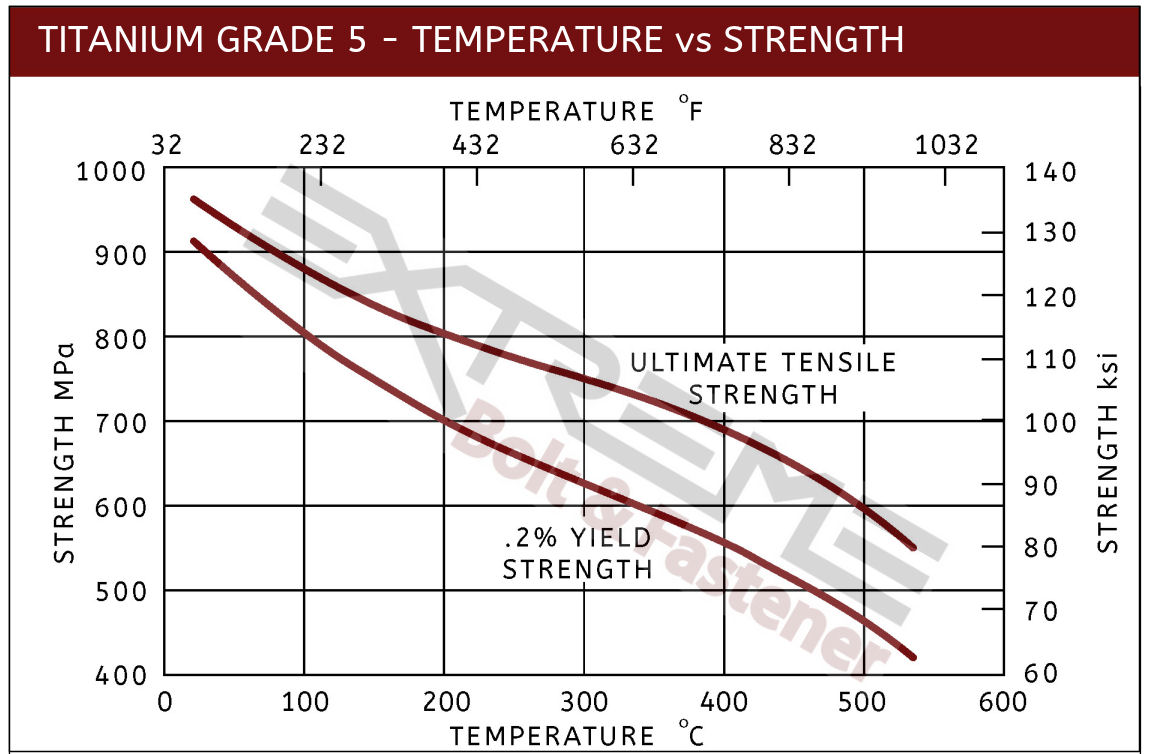
Not only are titanium grade 5 fasteners extremely strong, offering 148 ksi UTS and 138ksi yield they are also incredibly light. With a density of 4.51 g /cm3, titanium has on of the the highest strength-to-weight ratios available to industry. Titanium Grade 5 screws are 4 times stronger than 316 stainless steel at nearly half the weight. This makes titanium fasteners ideal for applications that require both lightness of weight and excellent strength such medical, military and sporting goods.
Which Grade is Best for Your Application?
The most common grades of of Titanium fasteners are Grade 2 (commercially pure Ti) and Grade 5 (Ti 6Al-4V - high strength). Still not sure? With decades of materials expertise and industrial experience, our engineers can help you select the best titanium fastener for your application. Other resources include: Titanium Torque Specs.
Titanium Grades, Chemistry & Specifications
Titanium Grade 2 / UNS R50400 / 3.7035 (Commercially Pure)
Unalloyed titanium; Commercially pure titanium is the most common grade of titanium utilized throughout industry due to its ease of availability and good properties. Learn more about titanium grade 2.
Titanium Grade 2 Specifications: UNS R50400, ASTM B 348, AMS 4921, ASTM F 67, ISO 5832-2, EN 3.7035, ASTM F467 (Nuts), ASTM F468 (Bolts, Screws, Studs)
| Titanium Grade 2 | Ti | Fe | O | C | N | H |
|---|---|---|---|---|---|---|
| Min % | - | - | - | - | - | - |
| Max % | Bal | 0.30 | 0.25 | 0.08 | 0.03 | 0.015 |
Titanium Grade 5 (Ti 6Al-4V) / UNS R56400 / 3.7165
Known as the “workhorse” of the titanium alloys, Ti 6Al-4V, or Grade 5 titanium, is 2x stronger than titanium grade 2. This alloy offers high strength and light weight, useful formability and high corrosion resistance. Ti 6AI-4V finds many uses in the aerospace, medical, marine and chemical processing industries. Learn more about grade 5 titanium.
Titanium Grade 5 Specifications: UNS R56400, EN 3.7165, ASTM - B265, B348, B381, B861, F467 and F468, AMS - 4911, 4928, 4935, 4965 and 4967, MIL-T - 9046 and - 9047, EN 3.7165, ASTM F467 (Nuts), ASTM F468 (Bolts, Screws, Studs)
| Titanium Grade 5 | Ti | Al | V | Fe | O | C | N | H |
|---|---|---|---|---|---|---|---|---|
| Min % | - | 5.5 | 3.5 | - | - | - | - | - |
| Max % | Bal | 6.75 | 4.50 | 0.30 | 0.20 | 0.08 | 0.05 | 0.0150 |
Titanium Grade 7 (Ti-0.15Pd) / UNS R52400 / 3.7235
Grade 7 is the most corrosion resistant of all titanium alloys and is typically used in chemical processes and production equipment components. Similar to Grade 2, but with the addition of 0.12 to 0.25% palladium, Grade 7 has enhanced corrosion resistance to reducing acids and localized attack in hot halides. Click here to see a chart that compares titanium grade 7 to grade 2.
Titanium Grade 7 Specifications: ASTM - B265, B337, B338, B348, B363, B381, B861 and B862, EN 3.7235, ASTM F467 (Nuts), ASTM F468 (Bolts, Screws, Studs)
| Titanium Grade 7 | Ti | Fe | Pd | O | C | N | H |
|---|---|---|---|---|---|---|---|
| Min % | - | - | 0.12 | - | - | - | - |
| Max % | Bal | 0.30 | 0.25 | 0.25 | 0.08 | 0.03 | 0.0150 |
Titanium Grade 23 (TI 6AL-4V ELI) / UNSR56401 / 3.7165
Titanium grade 23 or TI 6AL-4V ELI is an Extra Low Intersticial grade. This grade is similar to Grade 5, but because of the low intersticials, its mechanical properties are enhanced. This ELI grade is often found in more demanding medical device applications as well as industrial applications.
Titanium Grade 23 Specifications: UNS R52400, ASTM - B265, B348, B363, B381, B861, B862 andF136, AMS - 4907, 4930 and 4956, EN 3.7165, ASTM F467 (Nuts), ASTM F468 (Bolts, Screws, Studs)
| Titanium Grade 23 | Ti | Al | V | Fe | O | C | N | H |
|---|---|---|---|---|---|---|---|---|
| Min % | - | 5.5 | 3.5 | - | - | - | - | - |
| Max % | Bal | 6.50 | 4.50 | 0.25 | 0.13 | 0.08 | 0.03 | 0.0125 |
| Temperature (°F) | Ultimate Tensile (ksi) | Yield Strength 0.2% Offset (ksi) | Elongation % |
|---|---|---|---|
| Room Temp. | 70 | 50 | 28 |
| 212 | 56 | 37 | 31 |
| 392 | 41 | 28 | 37 |
| 572 | 33 | 18 | 43 |
| 752 | 27 | 13 | 38 |
| 842 | 26 | 11 | 34 |
| Temperature (°F) | Ultimate Tensile (ksi) | Yield Strength 0.2% Offset (ksi) | Elongation % |
|---|---|---|---|
| Room Temp. | 138 | 128 | 14 |
| 300 | 121 | 105 | 16 |
| 500 | 110 | 93 | 17 |
| 700 | 100 | 82 | 18 |
| Temperature (°F) | Ultimate Tensile (ksi) | Yield Strength 0.2% Offset (ksi) | Elongation % |
|---|---|---|---|
| Room Temp. | 50 | 40 | 20 |
| 200 | 57 | 40 | 28 |
| 400 | 41 | 24 | 41 |
| 600 | 32 | 15 | 38 |
| Media | Temperature °F | Corrosion Rate mpy (mm/y) |
|---|---|---|
| Wet Chlorine | 50-190 | Nil - 0.02 (0.001) |
| Water Saturated, Chlorine Cell Gas | 190 | 0.065 (0.002) |
| Dry Chlorine | 86 | Rapid Attack, Ignition |
| Chloride | Concentration % | Temperature °F (°C) | Corrosion Rate mpy (mm/y) |
|---|---|---|---|
| Aluminum chloride | 5-10 | 140 (60) | 0.12 (0.003) |
| 10 | 212 (100) | 0.09 (0.002) | |
| 10 | 302 (150) | 1.3 (0.033) | |
| 20 | 300 (149) | 630 (16.0) | |
| 25 | 68 (20) | 0.04 (0.001) | |
| 25 | 212 (100) | 258 (6.55) | |
| 40 | 250 (121) | 4300 (109.2) | |
| Ammonium chloride | All | 68-212 (20-100) | <0.5 (<0.013) |
| Barium chloride | 5-25 | 212 (100) | <0.01 (<0.000) |
| Calcium chloride | 5 | 212 (100) | 0.02 (0.001) |
| 10 | 212 (100) | 0.3 (0.008) | |
| 20 | 212 (100) | 0.6 (0.015) | |
| 55 | 220 (104) | 0.02 (0.001) | |
| 60 | 300 (149) | <0.01 (<0.000) | |
| 62 | 310 (154) | 2-16 (0.051-0.406) | |
| 73 | 350 (177) | 84 (2.13) | |
| Cupric chloride | 1-20 | 212 (100) | <0.5 (<0.013) |
| 40 | Boiling | 0.2 (0.005) | |
| Cuprous chloride | 50 | 194 (90) | <0.1 (<0.003) |
| Ferric chloride | 1-20 | 70 (21) | Nil |
| 1-40 | Boiling | <0.5 (<0.013) | |
| 50 | Boiling | 0.16 (0.004) | |
| 50 | 302 (150) | <0.7 (<0.018) | |
| Lithium chloride | 50 | 300 (149) | Nil |
| Magnesium chloride | 5 | 212 (100) | 0.03 (0.001) |
| 20 | 212 (100) | 0.4 (0.010) | |
| 50 | 390 (199) | 0.2 (0.005) | |
| Manganous chloride | 5-20 | 212 (100) | Nil |
| Mercuric chloride | 1 | 212 (100) | 0.01 (0.000) |
| 5 | 212 (100) | 0.42 (0.011) | |
| 10 | 212 (100) | 0.04 (0.001) | |
| 55 | 215 (102) | Nil | |
| Nickel chloride | 5-20 | 212 (100) | 0.14 (0.004) |
| Potassium chloride | Saturated | 70 (21) | Nil |
| Saturated | 140 (60) | <0.01 (<0.000) | |
| Stannic chloride | 5 | 212 (100) | 0.12 (0.003) |
| Stannous chloride | Saturated | 70 (21) | Nil |
| Sodium chloride | 3 | Boiling | 0.01 (0.000) |
| 20 | 165 (74) | 0.01 (0.000) | |
| 29 | 230 (110) | 0.01 (0.0003) | |
| Saturated | 70 (21) | Nil | |
| Saturated | Boiling | Nil | |
| Zinc chloride | 20 | 220 (104) | Nil |
| 50 | 302 (150) | Nil | |
| 75 | 392 (200) | 24 (0.610) | |
| 80 | 392 (200) | 8000 (203.2) |
| Media | Name | Temperature | Corrosion Rate (mpy) |
|---|---|---|---|
| 5% to 99.7% C₂H₄O₂ | Acetic Acid | 255°F | nil |
| 10% AlCl₃ | Aluminum Chloride | 220°F | 1.10 |
| 25% AlCl₃ | Aluminum Chloride | 68°F | 0.04 |
| 10% H₃BO₃ | Boric Acid | Boiling | nil |
| Cl₂ | Chlorine Gas (dry) | 140°F | VERY HIGH |
| Cl₂ with >1.5% H₂0 | Chlorine Gas (wet) | 392°F | nil |
| 50% CuSO₄ | Copper Sulfate | Boiling | nil |
| 1% to 30% FeCl₃ | Ferric Chloride | 212°F | nil |
| 90% CH₂O₂ | Formic Acid (aerated) | 212°F | 0.05 |
| 90% CH₂O₂ | Formic Acid (non-aerated) | 212°F | 118.00 |
| 1% HCl | Hydrochloric Acid | 100°F | 1.2 |
| 5% HCl | Hydrochloric Acid | 200°F | 260.00 |
| 20% HCl | Hydrochloric Acid | 95°F | 165 |
| 50% MgCl₂ | Magnesium Chloride | 392°F | 0.20 |
| 40% HNO₃ | Nitric Acid | 212°F | 2.3 |
| 70% HNO3 | Nitric Acid | 158°F | 1.56 |
| 10% H₂C2O₄ | Oxalic Acid | 95°F | 0.58 |
| 5% H₃PO₃ | Phosphoric Acid | 151°F | 0.20 |
| 30% H₃PO₃ | Phosphoric Acid | 140°F | 39 |
| 85% H₃PO₃ | Phosphoric Acid | 70°F | 7.00 |
| 5% H₂SO₄ | Sulfuric Acid | 70°F | 9 |
| 25% H₂SO₄ | Sulfuric Acid | 77°F | 28.30 |
| 75% H₂SO₄ | Sulfuric Acid | 95°F | 41 |
| 98% H₂SO₄ | Sulfuric Acid | 392°F | 1.50 |
| Seawater at high pressure | 690°F | nil | |
| Corrosive Media | Concentration (%) | Temperature (°C) | Corrosion Rate (mm/year) | |
|---|---|---|---|---|
| Grade 7 | Grade 2 | |||
| Aluminium Chloride | 10 | 100 | <0.025 | <0.025 |
| 25 | 100 | 0.025 | 50 | |
| Chlorine (wet) | – | Room | <0.025 | <0.025 |
| Citric Acid | 50 | Boiling | <0.025 | 0.4 |
| Hydrochloric Acid (HCl) | 5 | Boiling | 0.18 | >10 |
| Hydrochloric Acid (N₂ Saturated) | 3 | 190 | 0.025 | >28 |
| 5 | 190 | 0.1 | >28 | |
| 10 | 190 | 8.8 | >28 | |
| 15 | 190 | 40 | – | |
| Hydrochloric Acid (O₂ Saturated) | 3 | 190 | 0.13 | >28 |
| 5 | 190 | 0.13 | >28 | |
| 10 | 190 | 9.2 | >28 | |
| Sodium Chloride | Brine | 93 | <0.025 | – |
| 10 | 190 | <0.025 | – | |
| + Acidified pH1.2 | 23(a) | Boiling | – | nil |
| Sulphuric Acid | 5 | Boiling | 0.5 | 48 |
| Sulphuric Acid (N₂ Saturated) | 1 | 100 | – | 7 |
| 1 | 190 | 0.13 | – | |
| 5 | 100 | – | 26.5 | |
| 5 | 190 | 0.13 | – | |
| 10 | 190 | 1.5 | – | |
| Formic Acid | 50 | Boiling | 0.075 | 3.6 |
| Oxalic Acid | 1 | Boiling | 1.13 | 45 |
| Phosphoric Acid | 50 | 70 | 1.8 | 10 |
| 10 | Boiling | 3.2 | 11 | |
Titanium fastener styles
Titanium Screws


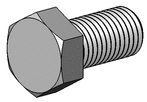
Titanium Bolts
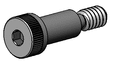


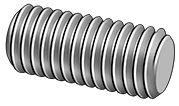
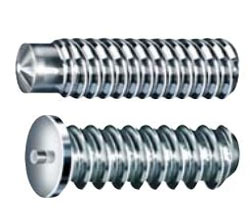
Titanium Studs & Threaded Rods

Titanium Washers


Titanium Hose Clamps

Titanium - Frequently Asked Questions
Answers from our engineers, drawn from the Titanium technical questions we're asked most.
Specialty Bolts for Crevice Corrosion
Q: Why is saltwater crevice corrosion so tough on metals? A: Saltwater contains chlorides that can be highly corrosive to many various metals including common grades of stainless steel. The most common corrosion concern in saltwater is crevice corrosion. This happens when saltwater gets trapped and remains stagnant in tight spaces like the threads of a bolt. In these crevices, and localized high concentrations of chlorides could exist which accelerate corrosion. Fortunately, there are some specialized metals that are ideal in preventing salt water crevice corrosion and minimizing its impact. These include: Titanium Bolts Titanium grade 2 and the stronger grade 5 are almost inert to salt water environments in both rapid and stagnant sea water. AL6XN Bolts Developed for use in salt water, AL6XN is a 6 Moly stainless alloy. This means it is composed of a minimum of 6% molybdenum, making it more corrosion resistant than standard grades of stainless. AL6XN bolts offer excellent resistance to pitting and crevice corrosion. Duplex Bolts Duplex steels (both Duplex 2205 and Super Duplex 2507) offer improved corrosion protection compared to 300 series stainless, especially in terms of localized corrosion such as crevice and pitting. Though Duplex bolts are not as robust as titanium or AL6XN in salt water, they are an excellent economic solution. MonelRenowned for its resistance to saltwater, Monel bolts are the go-to material for many naval vessels. Monel fasteners are available in two grades Monel 400 and Monel K500. Both grades are extremely resistant to saltwater, with K500 Monel offering twice the strength.
Quick Guide to Aerospace Fastener Materials
<p <img src="/blog/2026/06/MP35N photo-300x206.png" alt="" width="300" height="206" data-align="left" / </p <p Aerospace materials are not just components, they are mission-critical decisions. Every fastener must perform flawlessly. As an <a href="/quality" AS9100 certified</a supplier, the engineers at Extreme Bolt have in-depth knowledge to guide you through some of the most relevant <a href="/industries/aerospace" aerospace fastener</a materials.</p <p </p <p </p <p </p <table <tbody <tr <td <a href="/materials/inconel" <img src=" alt="inconel 718 box6 2 v3" width="442" height="896" / </a </td <td <a href="/materials/a286" <img src=" alt="a286 box6 2" width="441" height="899" / </a </td </tr <tr <td <a href="/materials/waspaloy" <img src=" alt="waspaloy box6 2" width="442" height="899" / </a </td <td <a href="/materials/mp35n" <img src=" alt="mp35n box6 2 v2" width="437" height="898" / </a </td </tr <tr <td <a href="/materials/titanium/grade-5" <img src=" alt="titanium box6 2" width="439" height="896" / </a </td <td <a href="/materials/aluminum-7075" <img src=" alt="alum box6 2 v2" width="434" height="897" / </a </td </tr </tbody </table <p </p
I have a need to replace my current coated stainless steel fasteners with a material that can harmoniously with carbon fiber in a marine application. Do you have a recommendation for this?
With a metal being in contact with carbon fiber in a marine environment you will be susceptible to galvanic corrosion. Ideally if you could isolate the carbon fiber from the metal via a polymer this would be best like PEEK. If your application does not have high strength requirements this might be suitable. If you need a metal, your best bet would be grade 2 titanium. This may not stop the galvanic effects, but it will reduce them. Both of these solutions Extreme Bolt can help you with.
I need a fast and reliable fastener solution for a chlorinated water environment. We work in commercial swimming pools and need a quick solution that can handle both chlorine corrosion and be rust free.
One of the best solutions for chlorinated water that will never rust is titanium. Titanium bolts and screws provide unmatched resistance to chloride corrosion due to their ability to regenerate their protective passive layer in the presence of water. Titanium fasteners are known for reliable resistance to chlorine and therefore rust. These titanium fasteners are also readily available in standard sizes and are usually not as expensive as it may seem. Other materials to also consider would be Duplex 2205 bolts.
I’m in need of a hex head that has a minimum tensile yield strength 115 ksi and is also corrosion resistant to occasional saltwater spray for a deck handling systems. Is 17-4PH a good choice?
17-4PH stainless steel boltsoffer plenty of strength and while it is considered a stainless steel, it will corrode (rust) in the presence of sea water for sure. In your situation, there are far better materials for a combination of strength and corrosion resistance to seawater. For your application, an excellent option would be titanium grade 5 bolts. They offer 138ksi yield in combination with unbeatable resistance to saltwater corrosion.
I’m looking for replacements for m6 SS bolts on the head of a pump that pumps 12.5% NaOCl (bleach or sodium hypochlorite). The bolts tend to loosen over time and the bleach weeps out and destroys the A4 SS bolts. The operating temperature is about 80-90 F most of the year – so a little warmer than room temp.
Do you have a suitable replacement for them? They are M6 socket heads.
For sodium hypochlorite it’s definitely worth replacing the A4 bolts (316SS,) as they do not have a chance in that environment. The two best materials are titanium grade 2 bolts and Hastelloy C276 bolts. Both are excellent in chloride environments.
More on Titanium
What our customers say
More customer feedback“I purchased from you specifically because of Jon’s expertise and professionalism.”
“Very impressed; good prices and delivered earlier than lead time given, which was a real bonus.”
“Extreme Bolt is definitely on my go-to list.”