
Waspaloy Fasteners - Bolts, Screws & Nuts
Last updated
An age hardened super alloy with exceptional high temperature strength

Need help choosing a material?

- Extreme high temperature strength
- Service temperatures up to 1600°F (870°C)
- Very oxidation resistant
- Waspaloy chemistry & specifications
- Datasheet for Waspaloy
Waspaloy (2.4654) fasteners are known for their superb high strength at elevated temperatures. Waspaloy is a high performance nickel alloy combined with cobalt, chrome and molybdenum to create it’s unique combination of strength and high temperature stability.
Similar to that of Inconel 718 fasteners, Waspaloy fasteners exceed the strength and stability of Inconel 718 at elevated temperatures beyond 1400°F. In addition, the oxidation resistance of Waspaloy fasteners make it an ideal materials for high temperature applications like gas turbines engines, and a variety of other aerospace components.
Waspaloy (2.4654) Chemistry & Specifications
Waspaloy (2.4654) is a solution annealed and age hardended alloy which provides its high strength properties. There are a few aging varieties however the AMS 5708 is one of the more common.
Waspaloy Specifications: UNS N07001, ASTM B 637, AMS 5708, AMS 5709, EN 2.4654, Werkstoff 2.4654
| Waspaloy | Ni | Cr | Co | Mo | Ti | Fe | Al | Mn | Si | Cu | Zr | C | P | S | B |
|---|---|---|---|---|---|---|---|---|---|---|---|---|---|---|---|
| Min % | - | 18.0 | 12.0 | 3.50 | 2.75 | - | 1.20 | - | - | - | 0.02 | 0.02 | - | - | 0.0 |
| Max % | Bal | 21.0 | 15.0 | 5.00 | 3.25 | 2.0 | 1.60 | 1.00 | 0.75 | 0.50 | 0.12 | 0.10 | 0.030 | 0.030 | 0.010 |

Waspaloy fastener styles
Waspaloy Screws
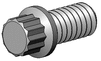


Waspaloy Bolts
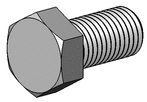
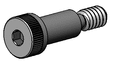


Waspaloy Studs & Threaded Rods
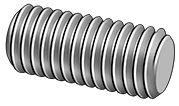
Waspaloy Washers


Waspaloy - Frequently Asked Questions
Answers from our engineers, drawn from the Waspaloy technical questions we're asked most.
Quick Guide to Aerospace Fastener Materials
<p <img src="/blog/2026/06/MP35N photo-300x206.png" alt="" width="300" height="206" data-align="left" / </p <p Aerospace materials are not just components, they are mission-critical decisions. Every fastener must perform flawlessly. As an <a href="/quality" AS9100 certified</a supplier, the engineers at Extreme Bolt have in-depth knowledge to guide you through some of the most relevant <a href="/industries/aerospace" aerospace fastener</a materials.</p <p </p <p </p <p </p <table <tbody <tr <td <a href="/materials/inconel" <img src=" alt="inconel 718 box6 2 v3" width="442" height="896" / </a </td <td <a href="/materials/a286" <img src=" alt="a286 box6 2" width="441" height="899" / </a </td </tr <tr <td <a href="/materials/waspaloy" <img src=" alt="waspaloy box6 2" width="442" height="899" / </a </td <td <a href="/materials/mp35n" <img src=" alt="mp35n box6 2 v2" width="437" height="898" / </a </td </tr <tr <td <a href="/materials/titanium/grade-5" <img src=" alt="titanium box6 2" width="439" height="896" / </a </td <td <a href="/materials/aluminum-7075" <img src=" alt="alum box6 2 v2" width="434" height="897" / </a </td </tr </tbody </table <p </p
I’m in need of hex head bolts for a gas turbine hot section application. These bolts would need good strength and min. temperature tolerance of 1000 degF. Any suggestions?
A286 bolts are an option, but would be on the lower end of these materials in terms of temperature stability. If you wanted a bit more safety margin in the temperature range, you could consider Inconel 625. Finally if you need the ultimate in strength at high temperature you could consider Inconel 718 or Waspaloy. Inconel 718 boltsoffer ultimate tensile strength of 210 ksi and Waspaloy bolts193 ksi. Both are commonly used in gas turbine applications.
You could see a comparative list of high temperature fasteners at / applications-high-temperature.<wbr / html
Overview of Extreme High Strength Fasteners
Extreme high strength fasteners made from advanced alloys allow industries such as aerospace, mining, and oil & gas to push the limits of what is possible. With requirements of ultimate tensile strengths beyond 200ksi this newsletter reviews these materials, their specific traits and niches.
Age hardened, 17-4PH fasteners can range from 125 -200ksi, but in the H900 condition they are capable of yield strengths over 4x’s that of 316 stainless steel. NICHE: Customized strength via several different age hardened conditions.
WASPALOY
Just under 200 ksi in UTI, Waspaloy fasteners maintains one of the highest strengths at elevated temperatures. NICHE: Strength at extreme temperatures well over 1300F exceeding that of Inconel 718.
INCONEL 718  and 175 ksi yield compared to an Inconel 718 bolt which can handle 193 ksi (UTS) and 132 ksi yield. Although Inconel bolts are slightly stronger, Waspaloy is more temperature resistant . Inconel 718’s maximum temperature usage is 1300F, where Waspaloy can be used to 1600F.
Fastener Torque Part 1 – The False Truth: It’s Really Tension that Matters
(Stay tuned next week for Part 2 – How to Measure Tension)
Everyone is always concerned about getting the right torque. Regularly, customers contact us requesting material torque charts. Everyone is so concerned about what they are setting their torque wrench to, that they are missing what matters most: getting the right tension.Getting the right tension cannot be achieved by looking at a torque chart or purchasing a top-of-the-line wrench. Even a brand new bolt will require +/-40% torque to achieve the same tension as another new bolt out of the same box.
The Difference Between Torque & Tension Torque is simply the effort (force) you apply to turn the bolt in place. When you apply the torque, it stretches the threads of the bolt and nut together. This “stretch” or elongation of the threads is called tension. It is tension that holds everything in place. Tension is critical in securing a bolt properly. If the tension is too week then the fastener could loosen; if it’s too tight the threads may be stripped or the bolt break.
Recently, we had a customer who called with a pile of broken bolts. He sent them back for analysis. In studying the material and the bolt structure, no flaws could be found. After further discussions with the customer we realized that the bolts were over torqued due to a change in lubricant and the tension was too tight, causing the bolts to break.
The Real Truth : Everyone is always concerned about applying the right torque. The Internet is littered with articles on checking torque. The crack-on/off test, the marking test. But the truth is. The same torque, applied to the same bolts, out of the same box will result in varying tensions. Measuring torque doesn’t mean a nickel – it’s measuring tension that counts.
Why Does the Same Torque Result in Different Tension
One word: Friction. The best way to help ensure the tension is correct is to take into account friction variables when applying torque and adjust the torque to allow for these variables. This can help to ensure that the resulting tension is accurate.
Lubrication
If too much lubricant is applied, less friction will cause the wrench to move easier and the nut to torque beyond the required tension (over torqueing)
Debris & Deformity
Think about shoveling a snowy driveway in winter. When there are a few flakes it’s easy to push the shovel, yet when the snow is a foot deep, if you use the same force, you won’t go very far. A bolt with deformed or rough threads, as well as a dirty bolt can act the same as a snowy driveway in a blizzard. If you apply the same torque to a rusty bolt as you did to a smooth new bolt, the toque slows down as it “plows” through the rust and the bolt doesn’t move as far as it would without rust. This means for the same toque the bolt turns a shorted distance and hence the tension is less.
Thread Pitch
Course verses fine threads also affect the torque which you will need to apply. Torque has to overcome friction in order to move the nut around the bolt. Just like the snow in the driveway, the more to move, the harder you have to push or torque for the requirement movement to occur. Hence, finer threaded fasters have more threads in a set length, which means more friction (snow), so greater torque is required.
Want to learn more? Click here to read Torque Part 2: How to REALLY Measure Tension
So Now What Should You Do? Yes, torque is not the most accurate method of getting the right tension, but it is a starting point. Here is a linkto our torque specs. Look out for next week’s sequel we will introduce ways you can accurately measure tension – for when precision is critical.
What our customers say
More customer feedback“I purchased from you specifically because of Jon’s expertise and professionalism.”
“Very impressed; good prices and delivered earlier than lead time given, which was a real bonus.”
“Extreme Bolt is definitely on my go-to list.”