
Lap Joint Flanges
Last updated
Lap joint flanges in specialty metals and engineered polymers
Lap Joint Flange Features
Lap joint flanges fit over a pipe with a flared or stub end. This allows the flanges to swivel freely to easily align bolt holes. These are ideal for systems whose design / layout may change or are frequently disassembled.
The biggest advantage of a lap joint flanges is when trying to connect exensive alloy piping systems. Since the stub ends could be easily be made from expensive alloys and is in contact with all the wetted areas, this frees up the more bulky backing flange to be made from more common, less expensive alloys if desired.
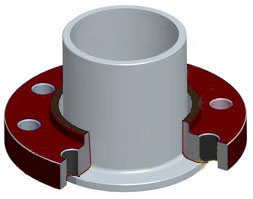

Engineering verification pending.
- Lap Joint Flange
- Stub End
- Butt Weld
- Pipe
Lap Joint Flange Sizes
Sizes
- 1/2 - 24"
Standards
- ANSI
- DIN
- JIS
Resources
Specifications
- ASME B16.5
- DIN 2641, 2642
Lap Joint Flange Materials
Specialty Metals
Lap Joint Flanges - frequently asked questions
What sizes are lap joint flanges available in?
Lap joint flanges are available in sizes from 1/2 inch to 24 inch. They are offered to ANSI, DIN, and JIS standards.
Which materials can lap joint flanges be made from?
What specifications do your lap joint flanges meet?
Our lap joint flanges are manufactured to ASME B16.5 and DIN 2641 and 2642 specifications, and are available in ANSI, DIN, and JIS standards.
What is the advantage of using a lap joint flange?
A lap joint flange fits over a pipe with a flared or stub end, allowing it to swivel freely so bolt holes align easily. This makes it ideal for systems that are frequently disassembled or whose layout may change.
How do lap joint flanges reduce cost on expensive alloy piping systems?
Only the stub end contacts the wetted areas, so it can be made from the expensive alloy while the bulkier backing flange is made from a more common, less expensive alloy. This lowers overall material cost on high-alloy piping systems.
What components make up a lap joint flange connection?
A lap joint flange connection consists of the lap joint flange, a stub end, a butt weld, and the pipe. The flange slips over the stub end, which is butt welded to the pipe.