Alloy 330 Fasteners - Bolts, Screws & Nuts
Last updated
An engineered high temperature resistant steel

Need help choosing a material?

- Excellent high temperature stability and chemistry and specifications
- Very oxidation and carburization resistant to 2100°F
- Good resistance to thermal shock and quenching
- Alloy 330 chemistry and specifications
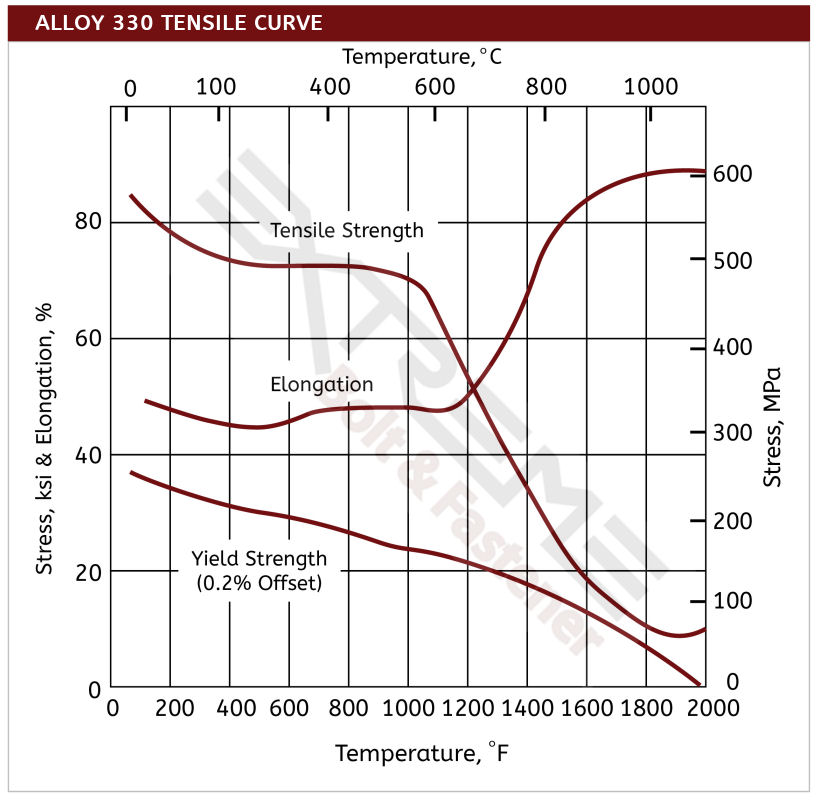
- Strength and mechanical properties
- ASTM F2281 specification for Alloy 330
- Alloy 330 Datasheet
Alloy 330 (1.4864) fasteners are specifically designed for high temperature furnace applications such as vacuum furnaces, heat treating and brazing applications. The most prized trait of alloy 330 is its ability perform under cyclic conditions of temperature extremes from heating and cooling; as well as in alternate carburizing and oxidizing atmospheres. An austenitic, nickel-chromium-iron-silicon alloy, 330 fasteners also offer industry a low coefficient of expansion, excellent ductility, and high strength.
Benefits & Corrosion Resistance
- Resistance to thermal shock from repeated quenching
- High level of resistance to oxidation and carburization
- Ability to handle thermal cycling
- Provides resistance to scale formation up to about 2000°F
- Good resistance to nitrogen-containing atmospheres where the oxygen content is low
- High nickel content of 34-37% provides high resistance to chloride stress corrosion cracking and embrittlement
Applications for Alloy 330 Fasteners
- Alloy 330 fasteners are often used in furnaces, thermal processing and heat treating applications.
- Gas turbine components and boiler fixtures used in power generation often use Alloy 330 fasteners.
- Because of its resistance to nitrogen rich environments, alloy 330 fasteners are used extensively for components handling cracked ammonia.
| Alloy 330 Properties | |
| Tensile Strength (ksi) | 80-85 |
| Yield Strength (ksi) | 30-43 |
| Elongation in 2” | 40-45 |
| Rockwell B Hardness | 70-85 |
| Density (lb/in3) | 0.292 |
| Specific Heat (Btu/lb/°F (32°-212°F) | 0.11 |
| Modulus of Elasticity Tension | 28.5 |
Alloy 330 (1.4864) Chemistry and Specifications
Alloy 330 (UNS N08330) is best known for its extreme high temperature strength and stability. One of the most unique attributes of Alloy 330 (1.4864) is its ability to handle cyclic temperature changes from extreme high temperatures to cooling phases, as well as in oxidation-rich environements.
Alloy 330 Specifications: UNS N08330, AMS 5592, AMS 5716, ASME SB 511, ASME SB 536, ASTM B 511, ASTM B 512, ASTM B 535, ASTM B 536, ASTM B 546, ASTM B 710, ASTM B 739, EN 10095, Werkstoff 1.4886, ASTM F2281
| Alloy 330 | Cr | Ni | Mn | Si | Cu | P | S | C | Fe |
|---|---|---|---|---|---|---|---|---|---|
| Min % | 18.0 | 34.0 | - | 1.00 | - | - | - | 0.04 | - |
| Max % | 20.0 | 37.0 | 2.00 | 1.50 | 1.0 | 0.03 | 0.03 | 0.08 | balance |
Alloy 330 fastener styles
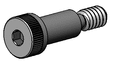
Alloy 330 Screws


Alloy 330 Bolts


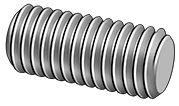
Alloy 330 Studs & Threaded Rods

Alloy 330 Washers


Alloy 330 - Frequently Asked Questions
Answers from our engineers, drawn from the Alloy 330 technical questions we're asked most.
Looking for a fastener to bolt together two HAST-X sheets that will be used as part of a furnace fixture assembly. Furnace will be used at temperatures up to 1000°C with cycling from 20°C to 1000°C and back to 20°C over a period of 2 days. This will be happening continuously as part of a production firing process. Any ideas?
For this temperature Inconel 600, 310 stainless steel and Alloy 330 can all handle temperatures to 1000C, but the differentiator is the thermal cycling. For this specific issue combined with the high temperature, I would recommend you look at Alloy 330. Alloy 330 bolts are often used in high temp furnaces for their resistance to thermal shock from repeated quenching. They can handle huge temperature swings as well as provide resistance to oxidation and carburization.
My customer is asking for a 1/2″ bolt for a high temperature application to 1300F that is to the spec ASTM F2281. What material is this and what is ASTM F2281?
The specification ASTM F2281 covers several materials including Inconel, Alloy 330 and A286. The spec does not designate a specific material, it just ensures that these materials covered under this specification meet certain mechnical requirements when the effects of extreme heat are critical. Here is a link to a chart that covers this specification.
Also if you are looking for a material covered by this spec that is usable to 1300F, all those I listed can be used to this temperature limit, it would just depend on other factors such as corrosion and high strength requirements.
I need some suggestions on bolting for an application that is running at 610 degree C in a thermal cycling environment (Room temperature to 610 deg C). Is A286 a good fit?
This will depend a bit on the loads you are dealing with, but one of the best materials to look at for high temperature cycling would be A286. A286 bolts offer high strength, as well as creep and oxidation resistance to about 700°C. Another choice would be Alloy 330 bolts. Alloy 330 fasteners are known for their ability to withstand cyclic temperature environments and are usable to around 1100C but not nearly as strong as A286 fasteners. These two options are some of the best choices for furnace applications.
Would you be able to quote fasteners, that will used to bolt together multi-piece heat treat racks cast from HX. The racks are used in both solution (water quench and polymer quench) and age furnaces. Our typical temperature range during heat treat cycles is 1300-1800°F but can be as high as 2100°F. Thanks!
For this application I would suggest Alloy 330 bolt. Alloy 330 is a very good choice for a heat treat furnace hardware. It offers excellent oxidation and carburization resistant to 2100°F. An alloy 330 bolt is also resistant to thermal shock and quenching. It would be a good bolt for your application.
I need a material that can stay oxidation resistant at 2000F in a cyclic temperature environment. Any suggestions?
One of the best choices is Inconel 601, UNS N06601,which is highly resistant to oxidation up to 2200°F and can handle even severe thermal cycling. These Inconel bolts will offer good high temperaturestrength and retain ductility after long service exposure. Also an excellent choice would be an Alloy 330 bolt. They offer oxidation and carburization resistance to 2100F – just over your requirement. Alloy 330 bolts are also known for their ability to withstand cyclic conditions of temperature extremes from heating and cooling. Which fastener is better, Inconelor Alloy 330, will depend on your strength requirements at temperature.
I was reading that high temperatures will accelerate the rusting of metal bolts. Is there a material that can prevent this. I’m using the screws at 1300F intermittently.
What you are looking for is an oxidation resistant bolt. When a metal oxidizes it is attacked by oxygen which accelerates at high temperatures. Depending on the strength requirements of your application but Alloy 330 boltsand A286 boltsare ideal for preventing oxidation, hence rust at high temperatures. They also work well for 1300F of intermittent heat.
More on Alloy 330
What our customers say
More customer feedback“I purchased from you specifically because of Jon’s expertise and professionalism.”
“Very impressed; good prices and delivered earlier than lead time given, which was a real bonus.”
“Extreme Bolt is definitely on my go-to list.”