
Lock Nuts
Last updated
Made of specialty metals, polymers and ceramics
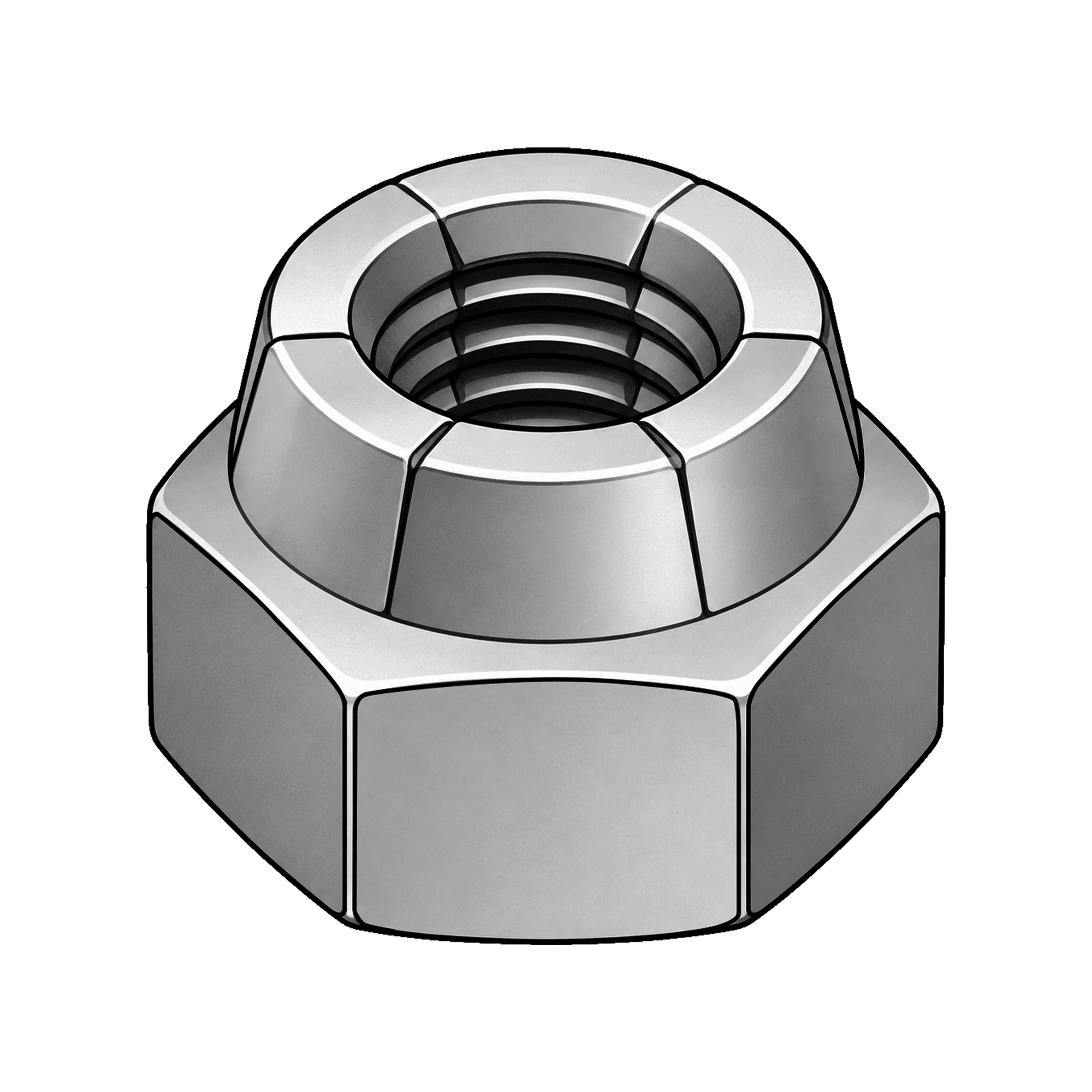
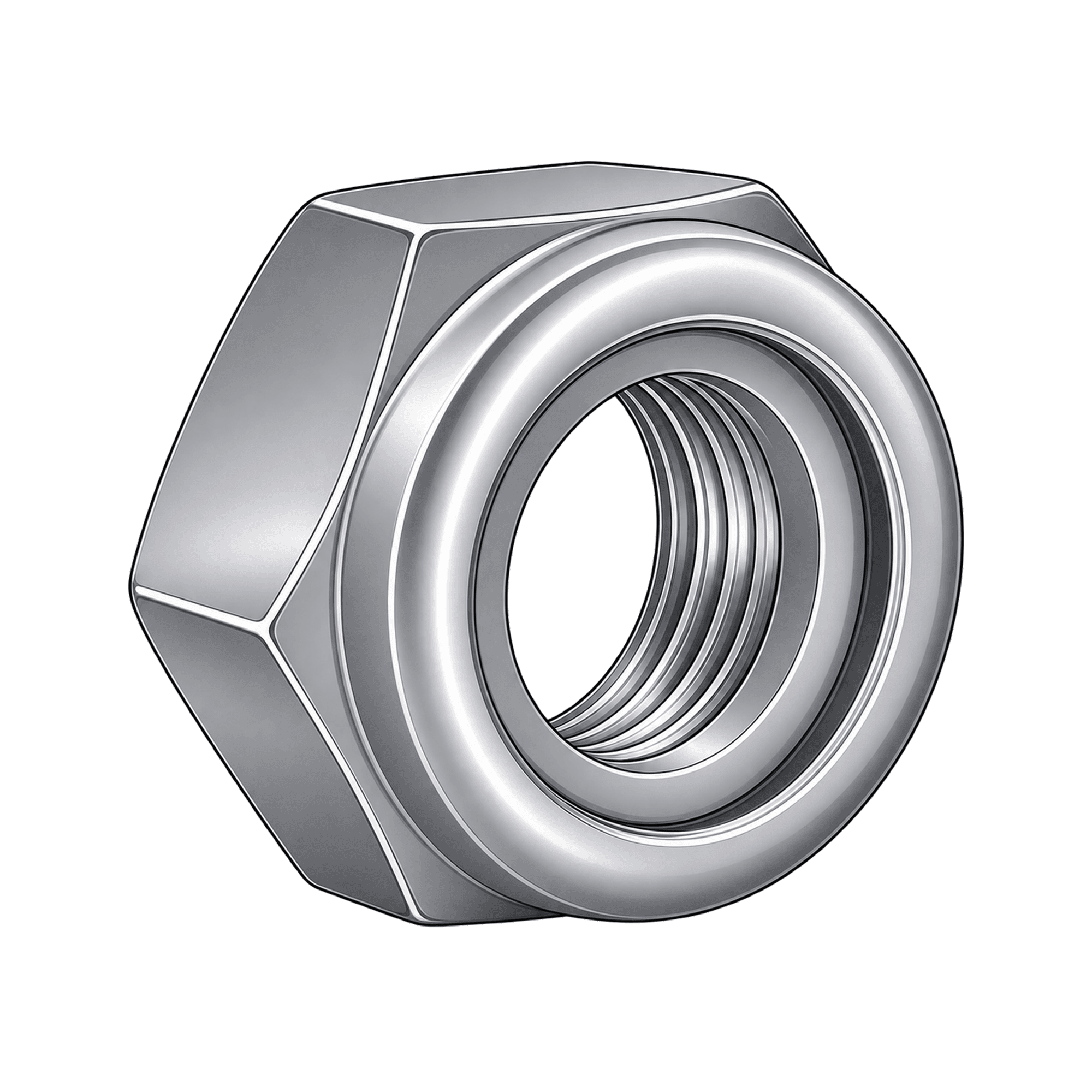
A locknut is a special type of nut that resists loosening from vibrations and torque. One of the most common styles is a prevailing torque locknut, which deforms elastically, preventing it from freely spinning like a standard nut.
The two most common and reliable forms of prevailing torque locknuts are the all-metal flexloc style and the polymer insert lock nut. A flexloc nut is all-metal in composition with a segmented collar that creates six “locking fingers,” that act as a spring. In addition to a flexloc, Extreme Bolt can produce several other all-metal lock nut styles such as top lock and stover.
Polymer-insert (or nylon-insert) locknuts feature an internal ring made from high-performance polymers. As a screw passes through, its threads "bite" into the insert, creating prevailing torque that securely locks the nut in place. Both all-metal and polymer insert locknuts are available in hexagonal and 12 point configurations.
Lock Nut Sizes
- #00 - 10"
- M1.2 - M250
Lock Nut Specifications
- ASME B18.16.3M
- DIN 980
- DIN 6923
- DIN 985
- DIN 986
- ISO 7042
- ISO 19513
- ISO 4161
- ISO 10511
- ISO 7040
Mil Spec Lock Nuts
NASM 25027, MIL-DTL-25027 and MIL-N-25027
MIL-N-25027 is superseded by MIL-DTL-25027; MIL-DTL-25027 is superseded by NASM 25027.
Mil spec NASM25027 covers the requirements for steel, corrosion resistant steel (CRES), aluminum alloy, copper alloy and nickel-copper alloy (Monel 400) self-locking nuts.
- 250˚F nuts
- 450˚F nuts
- 800˚F nuts
All Metal Flexloc Lock Nut
- Can be used at high temperatures
- Distributes load evenly due to the fact that it is manufactured as one solid piece.
- Is THE most reliable all-metal self-locking nut.
- As it is all metal, it is best for high temperature or corrosive applications
- One of the only all-metal lock nuts that is certified to 15 cycles of prevailing torque – which is military standard.
Polymer/Nylon Insert Lock Nut
- Overall the most reliable locknut, with the only limitation of application temperature
- Best for low temp applications, typically less than 350°F
- Various polymers inserts are available (Nylon, Vespel, PVDF, etc.)
- Excellent reusability – can reliably be re-used 15 times
- Eliminates galling and cold-welding common with exotic alloys
Additional Lock Nut Styles
Other all metal lock nuts available include the stover and elliptical styles. Though these styles are often a cheaper initial cost, they are less reliable than the flexloc style. As these styles delivering less prevailing torque cycles and often result in more failures, the flexloc style is a better investment for both reliability and cost savings.
Thread Options
Visit our thread options page for more information on Extreme Bolt's threading capabilities:
- Thread types and attributes
- Classes and tolerances
- How threading can affect bolt performance
- Specialty threads