PTFE Fasteners - Bolts, Screws & Nuts
Last updated
Outstanding chemical resistance at elevated temperatures

Need help choosing a material?

- Virtually inert to most organics, acids and bases
- Usable up to 260°C / 500°F but weakens significantly
- Excellent electrical insulator
- High purity for sensitive pharmaceutical and food type applications
- Custom injection molded & machined parts
- PTFE material datasheet
PTFE fasteners are made from the fluoropolymer polytetrafluoroethylene and are known for being exceptionally corrosion resistant and inert at elevated temperatures. PTFE fasteners are inert to most chemical environments including organics, acids, bases, mixed chemicals and hyrdofluoric acid. Additionally PTFE fasteners are bio-inert and will not leach into or contaminate sensitive pharmaceuticals or food based products.
Compared to other high performance polymer fasteners like PEEK or PVDF, PTFE fasteners offer the best all-around corrosion resistance especially at elevated temperatures. However the trade-off for its extraordinary corrosion resistance is the lower tensile strength compared to PVDF or PEEK fasteners.
Mechanical Data
 |

PTFE Properties
| Property | ASTM or UL Test | Teflon® PTFE |
|---|---|---|
| PHYSICAL | ||
| Density (lb/in³) (g/cm³) | D792 | 0.078 (2.2) |
| Water Absorption, 24 hrs (%) | D570 | < 0.01 |
| MECHANICAL | ||
| Strength/Weight Ratio | Tensile Strength / Density (g/cc) | 1800 |
| Tensile Strength (psi) | D638 | 3,900 |
| Tensile Modulus (psi) | D638 | 80,000 |
| Tensile Elongation at Break (%) | D638 | 300 |
| Flexural Strength (psi) | D790 | No Break |
| Flexural Modulus (psi) | D790 | 72,000 |
| Hardness, Rockwell, R/M Scale | D785 | R58 |
| IZOD Impact Notched (ft-lb/in) | D256 | 3.5 |
| THERMAL | ||
| Coefficient of Linear Thermal Expansion (x 10-5 in./in./°F) | D696 | 7.5 |
| Heat Deflection Temp (°F / °C) at 264 psi | D648 | 132 / 55 |
| Melting Temp (°F / °C) | D3418 | 635 / 335 |
| Max Operating Temp (°F / °C) | - | 500 / 260 |
| Thermal Conductivity (BTU-in/ft²-hr-°F) | C177 | 1.7 |
| Flammability Rating | UL94 | V-O |
| ELECTRICAL | ||
| Dielectric Strength (V/mil) short time, 1/8" thick | D149 | 600 |
| Dielectric Constant at 1 MHz | D150 | 2.1 |
| Dissipation Factor at 1 MHz | D150 | < 0.0002 |
| Volume Resistivity (ohm-cm) at 50% RH | D257 | > 10¹⁸ |
| APPROVALS | ||
| Approval | FDA | YES |
| Approval | USDA | NO |
| Approval | NSF | NO |
| Approval | 3A DAIRY | NO |
| Approval | USP CLASS VI | Medical Grades Available |
PTFE fastener styles


PTFE Bolts
PTFE Nuts

PTFE Studs & Threaded Rods

PTFE Washers


PTFE - Frequently Asked Questions
Answers from our engineers, drawn from the PTFE technical questions we're asked most.
Polymers at Cryogenic Temperatures
<u Polymers at Cryogenic Temperatures</u
Most often people want to know how hot a material can be used up to in an application, however for cryogenic applications, in media like liquified gasses (nitrogen, oxygen, carbon dioxide, LNG, etc.), we need to understand how materials perform at very cold temperatures. Polymer fasteners offer an excellent solution in cryogenic environments (including temperatures below -150°C) while minimizing thermal conductivity. As cryogenic applications grow, this area of engineering is finding its way into many industries such as:
• Supercomputers
• Pharmaceutical/biosciences applications
• Superconductors
• Magnetics
Benefits of Using Polymers in Cold Environments
• Low thermal conductivity
• Electrical insulating properties
• Sealing performance
• Ability to function as friction and wear surfaces without external lubrication
• Mechanically stable
That said, polymers do have their trade-offs at cryogenic temperatures. Generally, they become stronger, stiffer and harder – therefore less tough and hence more brittle. But even though their stiffness increases and impact strength is lowered at low temperatures, generally polymers will return to “normal” when heated up again.
Fluoropolymer for Low Temperatures
One class of polymers that excel at cryogenic temperatures are fluoropolymers. Examples of fluoropolymers are PVDF, PTFE and PFA. Like many materials they lose their flexibility at low temperature, but what is unique is that they retain their lubricity, abrasion resistance, and strength. Research has shown that PTFE that it is among the top fluoropolymers for cryogenics. PTFE can be used down to -328 °F (-200 °C) while showing little or no brittleness. It also remains highly flexible to nearly -100 °F below. While there are other fluoropolymers that can perform in extreme cold environments, they are not able to retain their material capabilities like PTFE.
Filled vs Unfilled Polymers
It’s important to point out that fiber reinforcements such as glass or carbon will make the polymers more brittle at cryogenic temperatures. However, if a polymer is being used for an application that involves large changes in temperature, it is a best practice to select a filled grade which will stabilize expansion. This chart shows that PEEK expands approximately 1% compared to only 0.3%. for 30% glass fiber reinforced PEEK.
Ductile / Brittle Transition Temperature Values
I need a polymer fastener that offers the best corrosion resistance at high temperatures. I’m using a low percentage of H2SO4 but temps can get up to 300F. Any ideas?
The best polymer fastener for high temperature corrosion resistance is PTFE screws. PTFE fasteners offer excellent corrosion resistance and are usable to about 500F. The only trade-off is that they are not extremely strong. If high strength is also important to your application, you may want to try PEEK fasteners. PEEK screws offer good corrosion protection especially if the concentration of acid is low. They are also usable to about 500F and are much stronger compared to PTFE.
I need a polymer fastener that can withstand high temp pharma sterilization processes? There may also be chemical contaminants in the process.
Depending on the temperatures you are looking at, the three options to consider would be PEEK, PVDF or PTFE fasteners. PEEK fasteners can be used to 500F. They are also resistant to many chemicals. Another option are PVDF fasteners. PVDF fasteners can only be used to 300F but offer a higher level of chemical resistance than PEEK. Finally there is PTFE. PTFE fasteners could be taken to 500F and are the most chemically inert of all the polymers. However the trade-off with PTFE is that it is also the weakest. All these polymers PVDF, PTFE and PEEK screws are approved by the FDA and USDA, so they are ideal for high purity pharmaceutical processes.
I’m using PEEK fasteners in hydrochloric acid but am seeing a slight bit of corrosion or degradation of the fastener. Can you recommend a better polymer for resistance?
For corrosion in HCL, a better choice may be PTFE screws. PTFE fasteners are virtually inert to most organics, acids and bases including HCl and far more corrosion resistant than PEEK. Like PEEK they are usable to about 500F, however the tradeoff is they won’t be as strong as PEEK. PEEK screws offer about 16,900psi of tensile strength where PTFE screws only offer about 3,900psi.
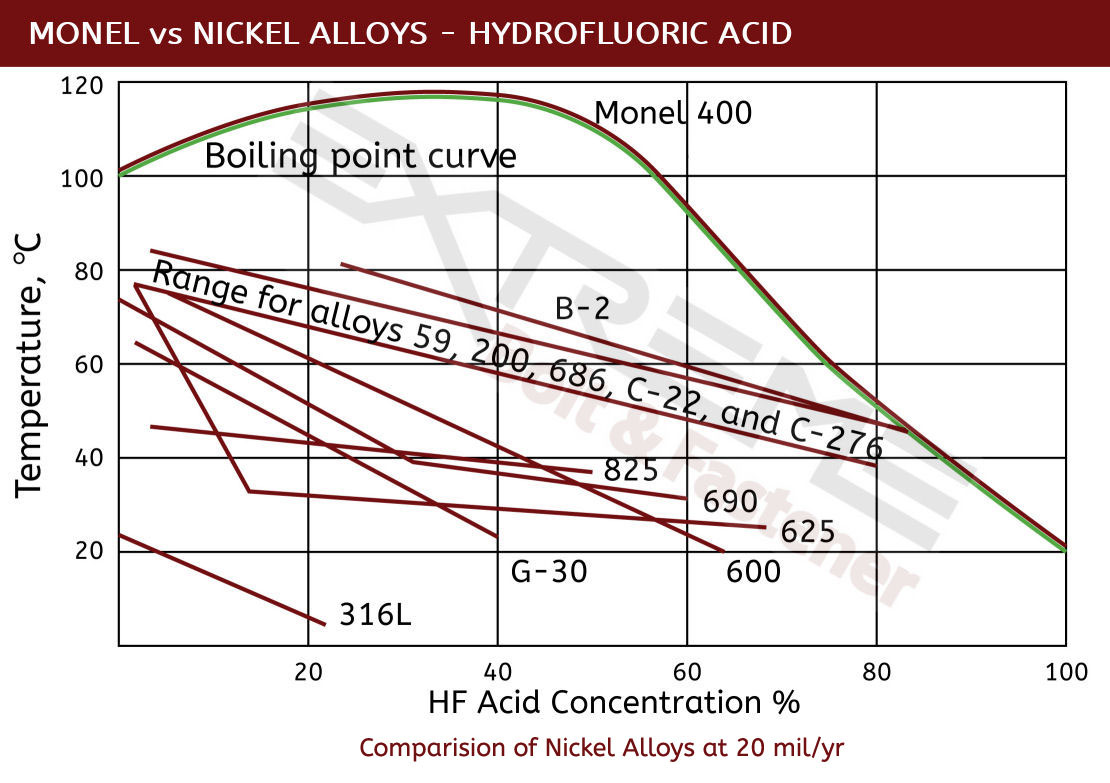
Will Nickel 200 bolts be a good choice for hydrofluoric acid?
For aqueous HF, Nickel 200 fastenersoffer limited protection. If application requires a metal then you may want to consider Monel 400. Monel 400 bolts are the most resistant option for hydrofluoric acid in all concentrations up to the boiling point. If metals aren’t required, then engineered polymers like PVDF/ PTFE fastenersalso offer excellent protection to HF.
Fasteners That Keep Us Safe
Modern day engineering is key to helping the world through this difficult time, and
specialty material bolts make it possible. Materials like titanium, PEEK and 17-4PH provide the corrosion resistance and high strength needed for manufacturing and high-tech distribution. This newsletter shows some of the ways Extreme Bolt & Fastener is helping their customers to help you.
Distribution
Large scale robotic systems play an important role in the fulfillment processes that bring you home deliveries. Extreme Bolt has supplied mass retailers high strength 17-4PH bolts to ensure these systems stay operational. Age hardened 17-4PH bolts provide extreme strength at 160-210ksi ultimate tensile strength.
Paper Goods
From toilet paper to disinfecting wipes, fasteners make it possible. Titanium screws are highly resistance to chloride corrosion, making them ideal for pulp and paper bleaching. Grade 5 titanium combines chloride resistance with high strength that is 4x that of 316 stainless. AL6XN fasteners are also key to chloride resistance and bleaching processes.
Pharmaceuticals & Medical Equipment
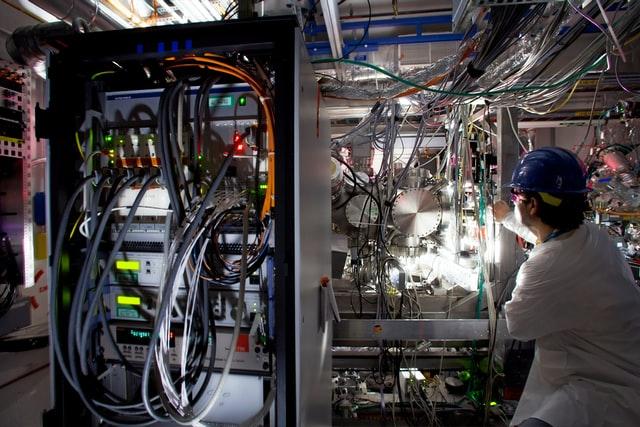
Inert fasteners (like PTFE and Hastelloy C276) that will not interact with sensitive pharmaceuticals and contaminate testing environments are essential. Extreme Bolt & Fastener works with leading pharma and medical device companies to ensure their products are safe and reliable.
Protective Gear P