310 Stainless Fasteners - Bolts, Screws & Nuts
Last updated
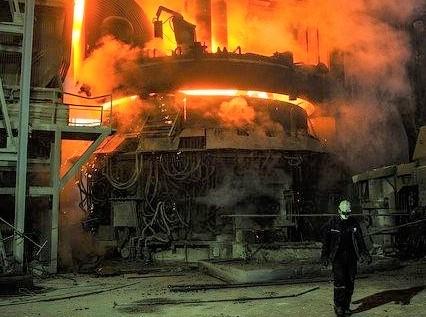
Good high temperature oxidation resistance to 2000°F

Need help choosing a material?

-
High temperature stability for moderate strength applications
- Good oxidation and carburization resistant to 2000°F
- Resistance to moderate sulfidation and nitriding
- Economic alternative to high temperature nickel alloys
- 310SS chemistry & specifications
- Datasheet for 310 stainless steel fasteners
Designed for high temperature applications, 310 stainless steel fasteners provide high temperature oxidation resistance to 2000°F under mild cyclic conditions. An economic alternative to nickel alloys like alloy 330 or Inconel, 310 fasteners provide slightly less strength and temperature resistance – but at a significantly lower price point. Alloy 310 can be used in moderately caburizing, moderately oxidizing, nitriding, cementing and thermal cycling applications when not used at the maximum service temperature. 310SS fasteners also have good resistance to sulfidation and other forms of hot corrosion. Although primarily known for its high temperature properties, 310 stainless steel also provides excellent performance at cryogenic temperatures, with toughness down to -450˚F. Though 310 is ideal for high temperature use, it should not be exposed to the severe thermal shock of repeated liquid quenching or where aqueous corrosive contaminants are present.
Benefits
- High temperature resistance.
- Excellent resistance to oxidation under mildly cyclic conditions.
- Good resistance to sulfidation and atmospheres where sulfur dioxide gas is encountered at elevated temperatures.
- Good resistance to thermal fatigue.
- Excellent toughness to cryogenic temperatures of -450°F.
- Low magnetic permeability.
- Good ductility and weldability.
Applications
- Thermal processing and high temperature furnaces rely on 310 fasteners for their high temperature and oxidation resistance in minor cyclic conditions.
- 310SS fasteners are commonly used in the petrochemical industry for their ability to provide resistance to moderately carburizing atmospheres.
- The high temperature properties of 310 fasteners make them ideal for ore processing, steel plants, power generation, and sintering.
- Cryogenic structures often use 310 stainless steel fasteners for their strength at -450°F and low magnetic permeability.
| 310 Stainless Steel Properties | |
| Tensile Strength (ksi) | 70 |
| Yield Strength (ksi) | 30 |
| Rockwell B Hardness | 95 |
| Density (lb/in3) | 0.285 |
| Electrical Resistivity (Microhm-in at 68°C) | 30.7 |
| Modulus of Elasticity (x 106 psi) | 28.5 |
| Thermal Conductivity at 212°F (BTU/hr/ft2/ft/°F) | 8.0 |
310 Stainless Steel Chemistry & Specifications
310SS Specifications: AMS 5521, AMS 5651, ASME SA 240, ASME SA 312, ASME SA 479, ASTM A 240, ASTM A 276, ASTM A 276 Condition A, ASTM A 276 Condition S, ASTM A 312, ASTM A 479, EN 10095, UNS S31008, UNS S31009, Werkstoff 1.4845
| 310 Stainless Steel | Cr | Ni | C | Si | Mn | P | S | Mo | Cu | Fe |
|---|---|---|---|---|---|---|---|---|---|---|
| Min % | 24.0 | 19.0 | – | – | – | – | – | – | – | – |
| Max % | 26.0 | 22.0 | 0.08 | 0.75* | 2.0 | 0.045 | 0.03 | 0.75 | 0.50 | balance |
*ASTM specification 1.50 max Si | ||||||||||
310 Stainless fastener styles
310 Stainless Screws


310 Stainless Bolts


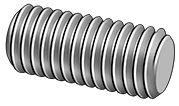
310 Stainless Studs & Threaded Rods

310 Stainless Washers


310 Stainless - Frequently Asked Questions
Answers from our engineers, drawn from the 310 Stainless technical questions we're asked most.
We are in need of 3/8″-16 a 1-1/2″ hex head cap screws in material that can withstand 1700° F operating temperature. What would you recommend?
A good option to consider would be 310 hex bolts. This is a high temperature stainless steel that should be good up to 2000F.
How does 316 Stainless Compares to Specialty Steel Alloys
316 stainless is a familiar alloy to many of us and perhaps one of the most widely used fastening materials. Though it serves a critical function for industry, 316 can often fall short in servicing challenging high strength, temperature and corrosion resistant applications. Here is how it measures up in these areas against some of the more specialty stainless steel alloys.
Strength
Compared to many specialty alloyed steels, 316 stainless falls short in terms of strength. Beyond moderate strength options such as duplex steel, extreme steel alloys such as A286 and 17-4PH bolts can provide up to 210ksi of ultimate tensile strength – almost 3x that of a 316 bolt.
316 stainless steel bolts can be used from subzero to temperatures up to about 800F. Past this limit the mechanical properti
es of the alloy fails and the material can oxidize more rapidly. This falls around the middle of the temperature range of stainless steels, as there are some specialty stainless steels that are temperature sensitive, like duplex steels and 17-4PH, where going beyond 570F or 600F changes the materials characteristics. However, there are a handful heat / oxidation resistant stainless alloys like A286, alloy 310 and alloy 330 provide excellent protection high temperatures up to 2100F. These stainless steels are designed to be temperature stable and oxidation resistant.
Corrosion
Though 316 doesn’t have the corrosion resistance of a nickel alloy it can perform reasonably well in mild corrosive situations. It is often used for mild resistance to sulfur compounds, acetic acid and phosphoric acid. In contrast, Alloy 20 is a stainless-steel alloy that is designed for corrosion protection and can offer significantly improved corrosive resistance to acids like, acidic acid, sulfuric acid and hydrochloric acid.
316 Hydrochloric Acid Corrosion 316 Phosphoric Acid Corrosion
316 Sulfuric Acid Corrosion 316 Nitric Acid Corrosion
316 Acetic Acid Corrosion
Chart Source: North American Stainless
AL6XN (6 Moly Alloy) is another stainless steel alloy developed for salt water environments and is ideal for marine corrosion – a vast improvement in these conditions over 316 bolts. For chlorides and mild saltwater corrosion, duplex and super duplex stainless steel bolts provide significant corrosion performance over 316 bolts. As always, it depends on the exact corrosion environment to determine which stainless steel is best, but for sure, Alloy 20, AL6XN (6 Moly Alloy) and the Duplex steels are optimized for improved corrosion performance over 316 stainless steel.
Chloride Stress Corrosion Cracking: 316 Stainless Steel vs. Duplex 2205
Chart Source: North American Stainless
I have a high temperature application that requires bolts that can withstand around 1900F. There is almost no corrosive contamination – strictly heat and oxidation resistance are required. I see both Inconel 600 and 310 stainless can be used at this temperature – what is the difference and which would you recommend.
Great question. Just looking at these bolts from a high temperature perspective they are both usable to 2000F; and both provide good carburization and oxidation resistance in hot environments. The main difference in these fasteners is their strength capabilities. Inconel 600 bolts offer much higher strength (93ksi ultimate tensile strength ) compared to that of 310 stainless bolts(70ksi ultimate tensile strength). If the strength you require doesn’t exceed 70ksi, then the 310 bolts will be a more economic option to meet your application requirements.
What is the difference between alloy 330SS and 310SS bolts?
Good question. Alloy 330 and 310 are fairly similar however there are some differences. Alloy 330 fastenersoffer high temperature protection, oxidation and carburization resistant to 2100°F whereas 310SSmaxes out at 2000°F. In addition, alloy 330 bolts provide improved protection to cyclic temperature conditions of extreme heating and cooling over 310SS. Finally, 330 offers 85ksi of ultimate tensile strength compared to 70 of 310SS fasteners. So why consider 310 SS? 310SSis more economical than alloy 330 bolts, however 330 is a higher performing in all other areas.
Can you tell me the difference between alloy 330 and 310 stainless fasteners? I’d like a more economic alternative to the 330 but didn’t know if 310 stainless could be used instead. I have extreme cyclic conditions running to about 2000F?
If cyclic conditions are a concern you may want to stick with the alloy 330 bolts to be safe. 310 stainless steel fasteners are more economical, than 330 but with slightly less strength and temperature resistance. For these alloys the primary difference between them is their ability to perform in thermal cycling situations. Alloy 330 bolts are known for their ability to perform in these cyclic conditions of heating and cooling. In terms of operational temperature limits these materials are similar with 310 stainless steel bolts having a max usability of 2000F where alloy 330 bolts can be used up to 2100 F.
I have a high temperature application that can reach close to 1800F that requires not just corrosion resistance from low levels of acid and salt contamination, but I also need good strength. Would Alloy 310 bolts work?
Alloy 310 bolts could be a possibility, depending on the strength you need. They have a yield of 30 ksi, which isn’t that high. They are however known for high temperature resistance which can reach 2000F, especially in thermal cycling conditions. If you do in fact require a high strength, corrosion resistant bolt that can work close to 2000F, I would suggest Inconel 625 fasteners. Inconel bolts offer a yield strength of 84ksi (over twice 310SS), plus they are extremely corrosion resistant and can be used to 1800F. I feel Inconel will give you the complete package – where 310SS bolts really are for high temperatures alone.
What our customers say
More customer feedback“I purchased from you specifically because of Jon’s expertise and professionalism.”
“Very impressed; good prices and delivered earlier than lead time given, which was a real bonus.”
“Extreme Bolt is definitely on my go-to list.”