

Tantalum Fasteners - Bolts, Screws & Nuts
Last updated
When nickel, titanium or zirconium alloys are not enough...

Need help choosing a material?

- Immune to numerous acids and chemicals
- Better corrosion resistance than nickel alloys, titanium or zirconium
- High strength and stiffness in vacuum and inert gas up to 2000°C (3600°F)
- Can become brittle when used in oxygen above 300°C
- High purity and biocompatibilty
- Physical Properties
- Tantalum's Chemistry Grades & Specs
- Datasheet for tantalum
Tantalum fasteners are best known for its unmatched corrosion resistance and chemical inertness. Tantalum fasteners have a similar corrosion resistance to that of glass, but all of the typical mechanical and electrical properties of a metal.
Tantalum fasteners are also extremely stable at high temperatures, since tantalum has a melting point around 3000°C. High temperature applications require vaccum or inert gas since tantalum may embrittle when used in oxygen rich environments above 250°C. Tantalum fasteners are also one of the most bio-compatible metals available and is also radio-opaque due to its high density (16.68 g/cm3).
All tantalum fasteners are available in commercially pure tantalum and tantalum 2.5% tungsten (Ta-2.5%W).
Contact us to see if your required tantalum fasteners are in stock and how our engineers may help you with your tantalum fasteners application.
Tantalum Grades, Chemistry & Specifications
Tantalum (Commercially Pure)
Commercially pure tantalum metal 99.95% pure tantalum as a minimum and has the best corrosion resistant properties of any metal when it come to most acids. While its corrosion resistance is exceptional, it is relatively soft and mechanically similar in strength to copper.
Specifications: UNS R05200, ASTM B521, ASTM B708, ASTM B365
| Tantalum (CP) | Ta | Nb | W | Mo | O | Ti | Ni | Fe | N | C | Si | H |
|---|---|---|---|---|---|---|---|---|---|---|---|---|
| Max % | >99.95 | 0.100 | 0.050 | 0.020 | 0.015 | 0.010 | 0.010 | 0.010 | 0.010 | 0.010 | 0.010 | 0.010 |
Tantalum 2.5% Tungsten (Ta-2.5W)
This grade of tantalum alloyed with 2.5% tungsten provided better overall strength while maintaining its exception corrosion resistant properties. For tantalum fastener applications this is usually preferred.
Specifications: UNS R05200, ASTM B521, ASTM B708, ASTM B365
| Tantalum 2.5%W | Ta | W | Nb | Mo | O | Ti | Ni | Fe | N | C | Si | H |
|---|---|---|---|---|---|---|---|---|---|---|---|---|
| Typical % | Bal | 2.5 | 0.50 | 0.020 | 0.015 | 0.010 | 0.010 | 0.010 | 0.010 | 0.010 | 0.005 | 0.002 |
Physical Properties
- Density 16.6 g/cc
- Melting Point 3290 K, 2996°C, 5462°F
- Boiling Point 5731 K, 6100°C, 9856°F
- Coefficient of Thermal Expansion (20°C) 6.5 x 10(-6) / °C
- Electrical Resistivity (20°C) 13.5 microhms-cm
- Electrical Conductivity 13% IACS
- Specific Heat .036 cal/g/°C
- Thermal Conductivity .13 cal/cm(2)/cm°C/sec
Tantalum Tensile Data
| Temperature (°F) | Ultimate Tensile (ksi) | Yield Strength 0.2% Offset (ksi) | Elongation % |
|---|---|---|---|
| Room Temp. | 40.0 | 25.0 | 50.0 |
| 200 | 29.0 | 22.0 | |
| 400 | 28.0 | 12.0 | |
| 600 | 28.0 | 8.0 | |
| 800 | 27.0 | 2.5 |
| Temperature (°F) | Ultimate Tensile (ksi) | Yield Strength 0.2% Offset (ksi) | Elongation % |
|---|---|---|---|
| Room Temp. | 50.0 | 35.0 | 25.0 |
| 200 | 48.0 | 30.0 | 15.0 |
| 400 | 42.0 | 27.4 | 10.0 |
| 485 | 40.0 | 25.5 | 10.0 |
Tantalum Corrosion Resistance Table
TANTALUM SHOWS A NIL CORROSION RATE TO THE FOLLOWING MEDIAFor all temperatures up to at least 302°F (150°C) unless otherwise indicated |
|||
|
Acetic acid |
Chlorine, dry, <250°C (480°F) |
Maleic acid |
Potassium sulfate |
TANTALUM SHOWS LIMITED CORROSION RESISTANCE TO THE FOLLOWING MEDIA |
|||
|
Air,>300°C (570°F) |
Hydrogen, >300°C (570°F)Hydrogen fluoride |
Potassium hydroxide, conc. |
Sodium hydroxide, conc. |
Tantalum fastener styles
Tantalum Screws


Tantalum Bolts
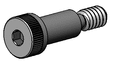
Tantalum Nuts

Tantalum Studs & Threaded Rods
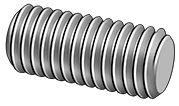

Tantalum Washers


Tantalum - Frequently Asked Questions
Answers from our engineers, drawn from the Tantalum technical questions we're asked most.
I’m looking to get some 1/2″ hex head screws that can survive up to 2000C. It is not a vacuum, but it will be in an inert environment.
In regards to ceramics, Zirconia screws would be the only option for these temperatures, but unfortunately a 1/2″ diameter is too large to produce from Zirconia. Probably your best bet in this environment would be a tungsten or tantalum screw. A vacuum or inert environment is fine for for tantalum or tungsten metals at 2000C, as long as there is no oxygen present.
Sulfuric Acid: Which Fastener Material is Best?
Sulfuric Acid ( H2SO4 ) is one of the most widely used and important acids, being an essential component to many industries. Equally as important is selecting the right material to survive this environment. This newsletter will provide options.
WHICH IS BEST? That depends on BOTH concentration and temperature – TOGETHER
When looking at corrosion, the temperature of an application and chemical concentration are interconnected – always. You cannot consider one without the other. If the concentration of a chemical is high, typically the temperature at which a material can handle the acid will be lower, and vice versa – for applications that run at a higher temperature, the concentration will generally need to be lower to prevent corrosion. That said there are still many materials that can handle hot sulfuric acid:
Alloy 20 bolts deserve a first look for basic high temperature resistance. It works well in 20-40% boiling sulfuric acid.
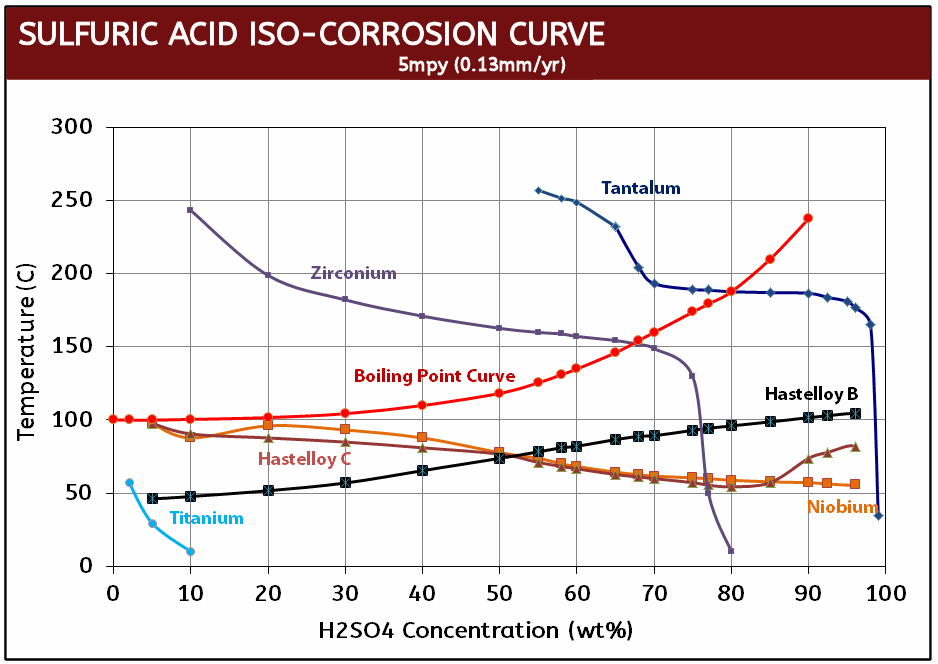
Hastelloycannot work in boiling H2SO4, but it can service high concentrations sulfuric acid to high temperatures typically below 135°F.
Zirconium is excellent for high temperature sulfuric acid up to 300°F and 70% concentration. But beware. Zirconium bolts can readily corrode if exposed to any oxidizers – even trace amounts. (see chart below)
Tantalum is the ultimate protection from H2SO<sub 4 </sub but comes at very high price. Therefore it is reserved for the most severe services. For ALL concentrations up to 98% at any temperature up to 350°F tantalum bolts will have virtually no corrosion rate.
• Hastelloy screws will not only perform excellent in high temperatures and concentrations, but also offers up to 100ksi of tensile strength.
• For higher strength, you can look at Inconel 625. Inconel bolts offer slightly less corrosion resistance than Hastelloy but can provide 144ksi of strength.
POLYMERS FOR H<sub 2</sub SO<sub 4</sub
• PTFE and PFA offer the highest level of corrosion resistance for polymers. The only drawback is they lack in strength.
• For high strength corrosion resistance to sulfuric acid, PEEK screws can offer good corrosion resistance and are the highest strength polymer available.
AND CERAMICS?
Yes, of course we always forget to mention these. Ceramics are usable to 4000°F and are almost inert to most chemicals including sulfuric acid. So they can handle both high temperatures and high concentrations – but not strength. Though ceramic screws are the right material for many applications, they lack yield strength and can be brittle – so they are an option under certain circumstances.
What fastener material is best for boiling sulfuric acid?
Generally speaking, for 20-40% concentrations, Alloy 20 bolts will be the best bet for an economic solution. For all other concentrations in boiling H2SO4 you would have to use tantalumbolts, which can be costly. Though Hastelloybolts work in sulfuric acid, they can’t handle boiling conditions.
Remember, corrosion can be tricky because there are many factors that can make a
material successful. Its best to review to our sulfuric acidcorrosion curves on this page:
I have a high pressure application that exposes my flanges to sulfuric acid? Can you suggest the best flange and material for this situation?
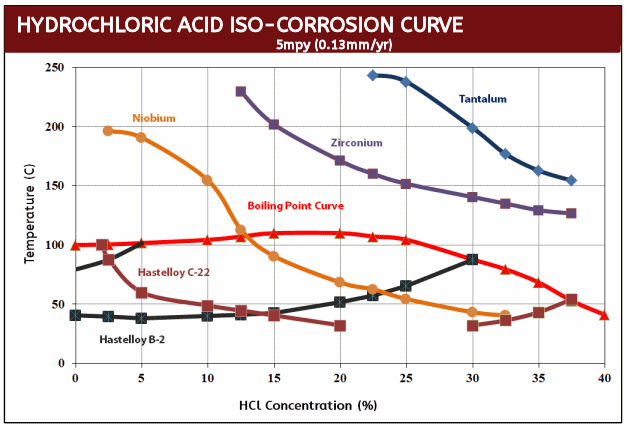
For high pressure applications weld neck flanges have a beveled end that, when connected to a pipe, creates a trough for a strong weld which is highly suitable for this situation. In terms of material, this always depends on concentration and temperature and various materials may work from Inconel, Hastelloy, Zirconiumand Tantalum(for the most severe).
I’m looking for a radiopaque material for an xray application. I’ve tried lead but need something that is more intense that could be made into a screw. Is there a material you can suggest?
Tungsten screws are excellent for radiopaque x-ray applications. Tungsten offers a higher density than lead at 19.3 gm/cc and therefore shows up better on x-rays than lead. Depending on what your application requires, you may also consider tantalum fasteners, as tantalum has a density of 16.7gm/cc.
I’m looking for a material that is radiopaque. Do you have any suggestions?
Two materials come to mind. First is tantalum. It is often used in medical applications for its radiopacity. Tantalum fasteners are also bio-compatible and extremely corrosion resistant. The second material is tungsten. Tungsten fasteners come in several grades depending on the strength and density needed. Tungsten is extremely dense and radiopaque. It also offers good high strength ranging from 94ksi up to 142 ksi for pure tungsten.
More on Tantalum
What our customers say
More customer feedback“I purchased from you specifically because of Jon’s expertise and professionalism.”
“Very impressed; good prices and delivered earlier than lead time given, which was a real bonus.”
“Extreme Bolt is definitely on my go-to list.”
