MP159 Bolts
Last updated
Ultra-strength combined with extreme temperature capabilities

Need help choosing a material?
- Extreme high strength properties up to 275 ksi ultimate tensile.
- Maintains superior strength to 1100°F.
- MP159 chemisty and specification
- Datasheet for MP159
As aerospace engineering advances, so must the materials to meet the technological requirements of this industry. Bolts made from MP159 have been developed to provide a solution to high temperature, high strength components. MP159 bolts offer strength capabilities similar to other Cobalt Alloys (MP35N) but can be used at much higher temperatures - up to 1100°F, compared to MP35N’s usable limit of 800F. In addition, MP159 bolts can be used beyond 1100°F in short term situations.
Key Benefits
- High ultimate tensile strength of 275 ksi and yield strength of 265 ksi (Cold Worked and Age Hardened) combined with excellent ductility and toughness
- Similar corrosion resistance compared to MP35N which is usable in mineral acids, hydrogen sulfide, seawater and salt spray environments.
- Excellent fatigue resistance and creep strength at elevated temperatures
- Excellent resistance to crevice corrosion, stress corrosion cracking and hydrogen embrittlement
Applications
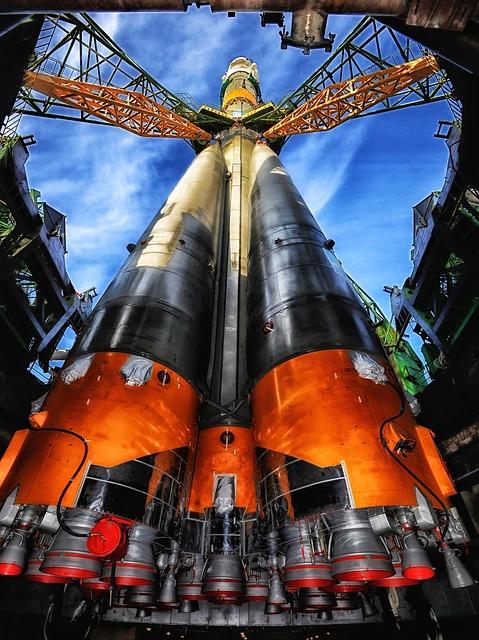
- The aerospace industry relies on MP159 bolts for its most advanced gas turbine and jet engines, rocket boosters and jet propulsion systems.
- Power generation and chemical processing utilize MP159 bolts for applications that demand high strength at extreme temperatures.
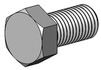
MP159 BoltTypes: Hex Head Bolts, Shoulder Bolts
MP159 Chemistry and Specifications
MP159N Specifications: UNS R30159
| MP159 | Co | Ni | Cr | Fe | Mo | Ti | Nb | Al |
|---|---|---|---|---|---|---|---|---|
| Typical % | 35.7 | 25.5 | 19 | 9 | 7 | 3 | 0.6 | 0.2 |
| Cold Worked, 48% +1225°F (663°C)/4 hrs/AC | |
|---|---|
| UTS ksi (MPa) | 275 (1895) |
| Yield strength at 0.2% ksi (MPa) | 265 (1825) |
| % Elogation | 8 |
| % RA | 35 |
| Shear strength ksi (MPa) Per MIL-STD-1312 | 138 (951) |