Incoloy Pan Head Screws
Last updated
A Ni-Cr alloy with very good high temperature stability

Need help choosing a material?

- Good high temperature strength
- Oxidization and carburization resistant at high temperatures
- Good corrosion resistance, which increases with the various grades
- Incoloy pan head screw features & benefits
- Download the Incoloy 800 datasheet and 825 datasheet
Not to be confused with Inconel, Incoloy pan head screws are made of a nickel alloy which contains iron and a lower content of nickel. Incoloy is essentially a more economical option to Inconel, yet with more restricted corrosion resistance and temperature limits. Typically, Incoloy is an ideal material for long-term exposure in high temperature environments due to its oxidation, carburization and creep resistance. Incoloy is widely used for its resistance to seawater, brine, sour gas and high chloride environments at elevated temperatures, which make it a popular choice in the oil and gas and power industries.
The most commonly used grades of Incoloy screws are Incoloy 800, 800H, 800HT; Incoloy 825; and Incoloy 925. For more indepth information on these specific grades, visit our specific web pages or contact one of our engineering experts:
Datasheets: Incoloy 800, 800H 800HT; Incoloy 825; and Incoloy 925
Screw Types Available: 12 Point Screws, Button Head Cap Screws, Flat Head Screws, Hex Head Cap Screws, Pan Head Screws, Set Screws, Socket Head Cap Screws, Tamper Resistant Security Screws, Vented Screws
Incoloy Pan Head Screw Features and Benefits
Pan head screws are flat on top and rounded on the sides. Incoloy pan head screws are ideal for:
- Small diameter fasteners – especially when the fastener size needed is too small for a wrench.
- When phillips or slotted drivers are desired. For many high strength specialty alloys, only slotted drives are available.
- Low torque applications because the drivers don’t offer as much force as a wrench.
- Large diameter head provides more clamping area.
How Are They Different from Button Head Screws?
Incoloy pan head and button head screws have very similar profiles however, button head screws allow for a hex socket driver whereas pan head screws do not.
Common Incoloy Chemistry, Grades & Specifications
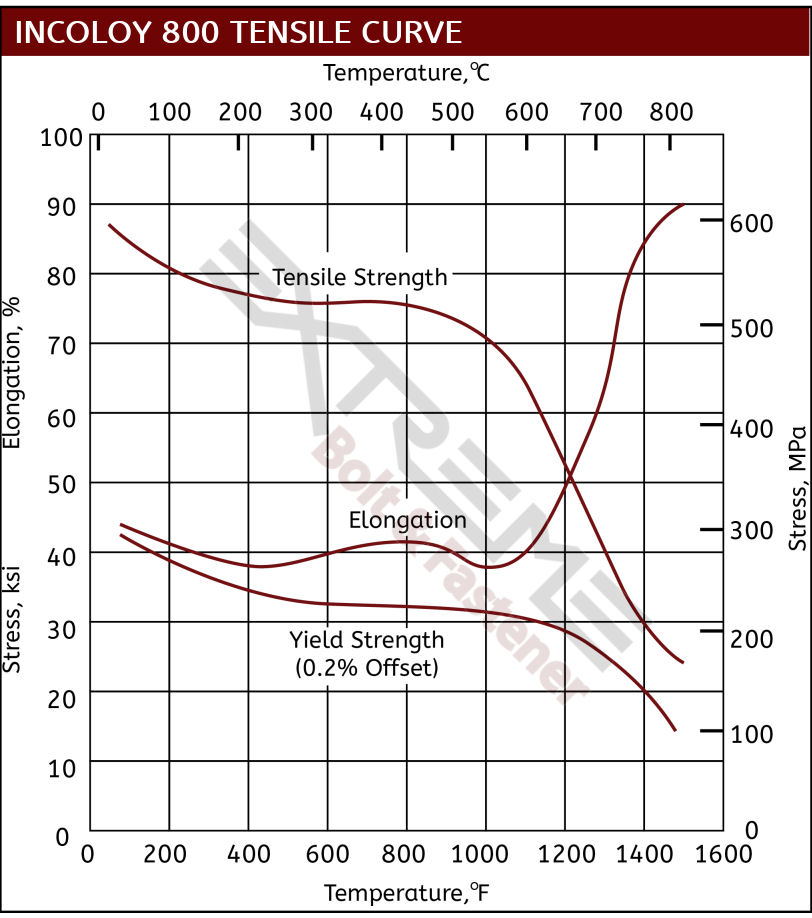
Incoloy 800, 800H, H00HT
Incoloy 800 series screws are best utilized for applications that require stable structure and good strength during prolonged exposure to high temperatures.
Incoloy 800, 800H & 800HT Specifications: UNS N08800/ N08810 / N08811 (800, 800H, 800HT), ASTM B408, ASME SB408, ASTM B564/ASME SB564, EN 10204-3.1, Werkstoff 1.4876 (800), Werkstoff 1.4876 H and 1.4958 (800H), Werkstoff 1.4876 HT and 1.4959 (800HT)
| Incoloy 800 | Ni | Fe | Cr | C | Al | Ti | Al-Ti |
|---|---|---|---|---|---|---|---|
| Min % | 30 | 39.5 | 19 | - | 0.15 | 0.15 | 0.3 |
| Max % | 35 | - | 23 | 0.1 | 0.6 | 0.6 | 1.20 |
| Incoloy 800H | Ni | Fe | Cr | C | Al | Ti | Al-Ti |
| Min % | 30 | 39.5 | 19 | 0.05 | 0.15 | 0.15 | 0.3 |
| Max % | 35 | - | 23 | 0.1 | 0.6 | 0.6 | 1.20 |
| Incoloy 800HT | Ni | Fe | Cr | C | Al | Ti | Al-Ti |
| Min % | 30 | 39.5 | 19 | 0.06 | 0.25 | 0.25 | 0.85 |
| Max % | 35 | - | 23 | 0.1 | 0.6 | 0.6 | 1.2 |
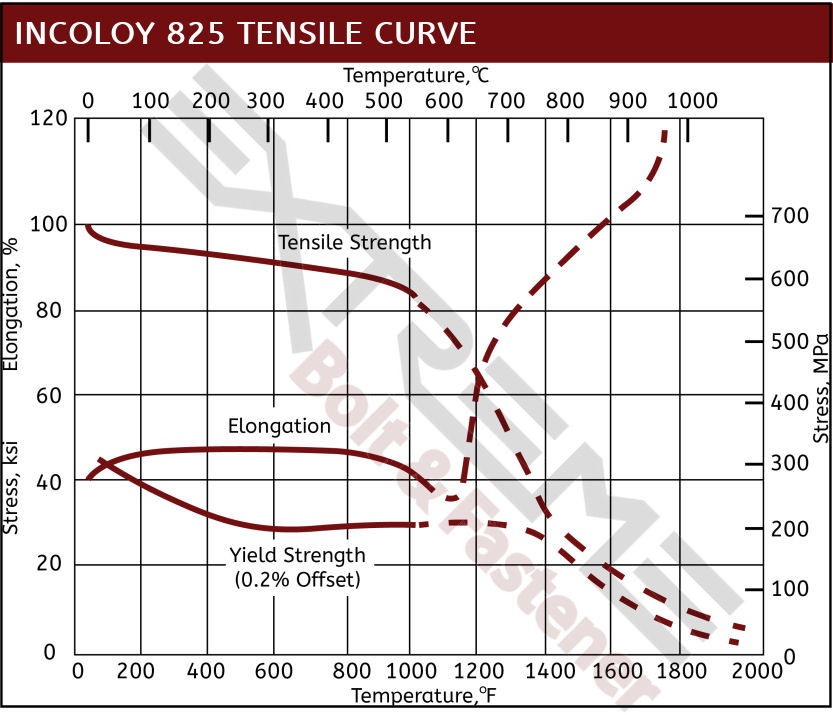
Incoloy 825
Related to the Incoloy 800 series alloys, Incoloy 825 differentiates itself with the additional elements of molybdenum and copper, which provides it improved corrosion resistance.
Incoloy 825 Specifications: UNS N08825, , BS 3076NA16, ASTM B 425, ASTM B 564, ASME SB 425, ASME SB 564, ASME Code Case N-572, DIN 17752, DIN 17753, DIN 17754, VdTÜV 432, ISO 9723, ISO 9724, ISO 9725, Werkstoff Nr 2.4858
| Incoloy 825 | Ni | Fe | Cr | Mo | Cu | Ti | C | Mn | S | Si | Al |
|---|---|---|---|---|---|---|---|---|---|---|---|
| Min % | 38 | 22 | 19.5 | 2.5 | 1.5 | 0.6 | - | - | - | - | - |
| Max % | 46 | - | 23.5 | 3.5 | 3.0 | 1.2 | 0.05 | 1.0 | 0.03 | 0.5 | 0.2 |
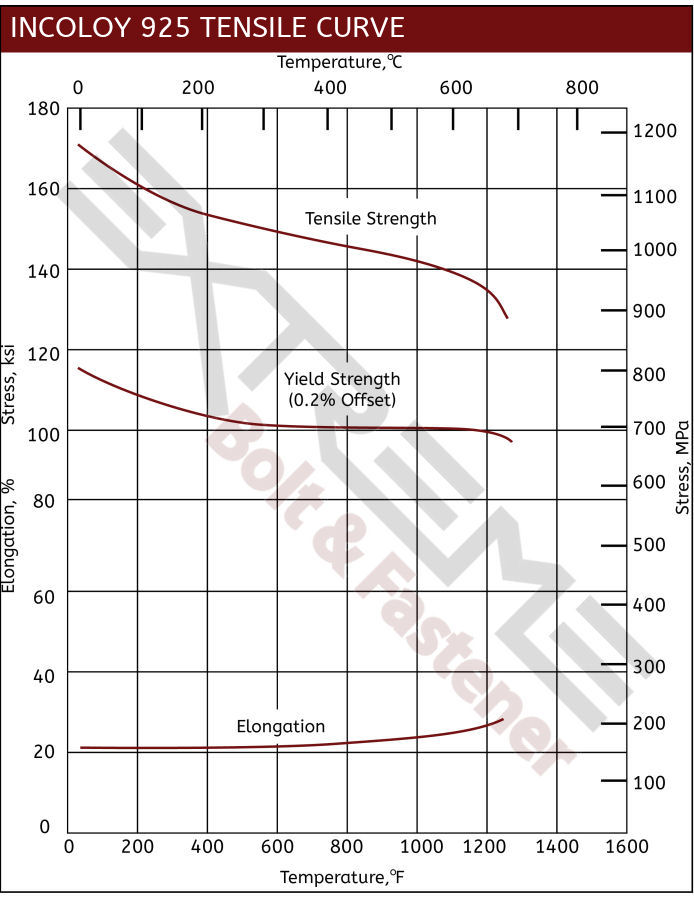
Incoloy 925
Incoloy 925 is a precipitation hardened alloy. It offers comparable corrosion resistance to it’s sister alloy Incoloy 825, but with the increased strength resulting from the age hardening process.
Incoloy 925 Specifications: UNS N09925, ASTM B637, NACE MR0175
| Incoloy 925 | Ni | Fe | Cr | Mo | Cu | Ti | C | Mn | S | Si | Al | Nb |
|---|---|---|---|---|---|---|---|---|---|---|---|---|
| Min % | 42 | 22 | 19.5 | 2.5 | 1.5 | 1.9 | - | - | - | - | 0.1 | - |
| Max % | 46 | - | 22.5 | 3.5 | 3.0 | 2.4 | 0.03 | 1.0 | 0.03 | 0.5 | 0.5 | 0.5 |